Standing in the courtyard of a concrete house in southern Bangladesh, it struck me how much effort goes into something we often reduce to a single indicator: "access to drinking water." This household has not one, not two, but four different water sources—each serving a specific purpose, each compensating for the limits of the others. This is not an outlier. It is resilience in practice, quietly built over time.
Published on: 20/01/2026
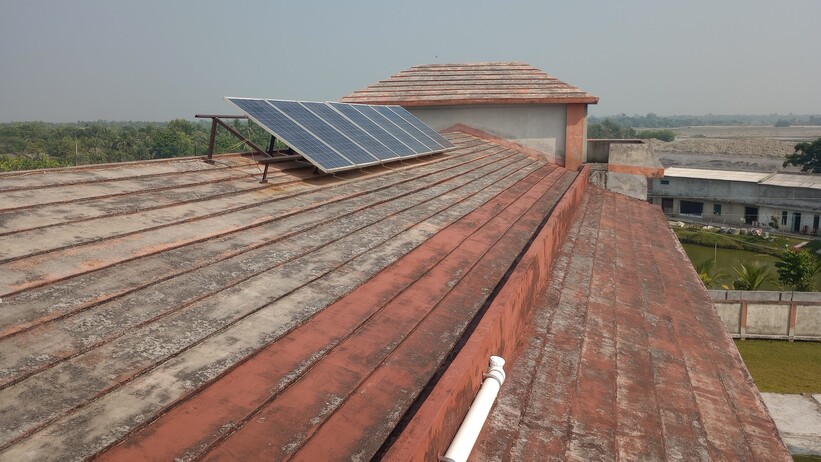
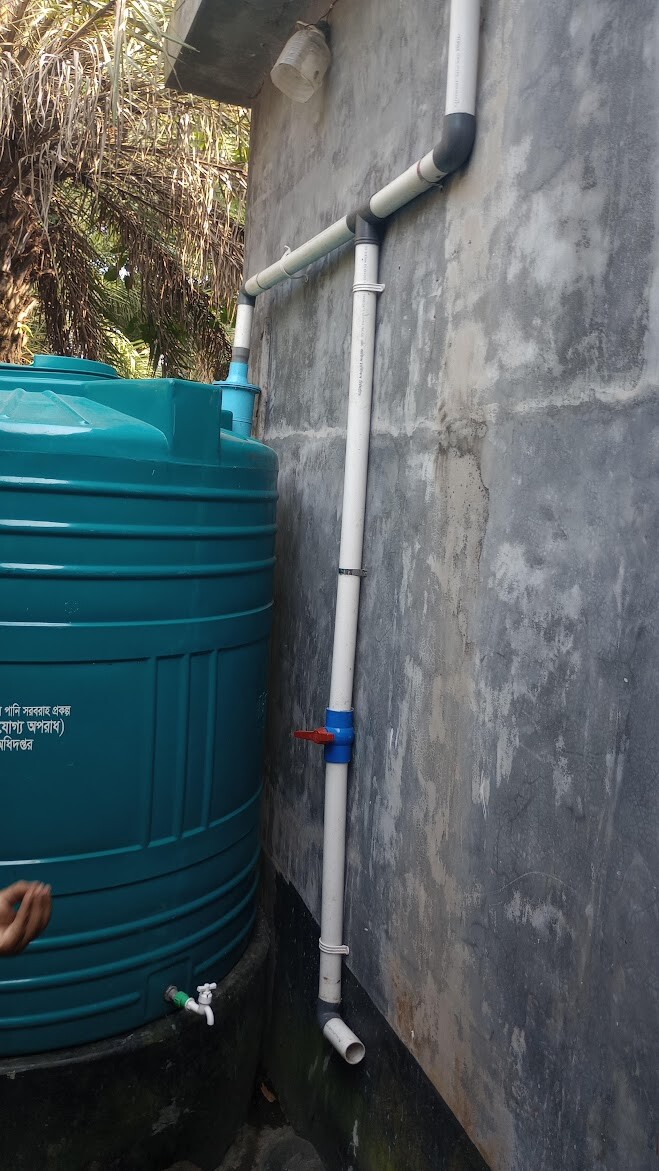
The household I visited has seven members. They are not among the poorest—often described locally as "graduated"—yet their daily water reality is complex and fragile. Rainwater is used for drinking, carefully collected from the roof and stored in a 10,000-litre tank (in this case supplied, with cost-sharing, by a climate initiative of the government). Pond water, settled and filtered through cloth, is used for cooking. A shallow tube well supplies water for washing, despite known saline contamination. And during the dry months, they buy treated (using Reverse osmosis) water —20 litres at a time—when the rainwater runs out.
This combination of sources is not a choice driven by preference. It is a necessity shaped by water quality, seasonality, infrastructure limits, and affordability. The rainwater tank, despite being substantial, is still insufficient for about two months each year. A larger tank would help, but that requires capital. Meanwhile, the toilet—clearly in poor condition—signals that even when a household invests heavily in water security, sanitation can still lag behind.
What this household shows, very clearly, is that there is no single "solution" that carries a family through the year.
Shallow handpump, with saline water, used for washing clothes
This reality also helps explain why the relatively advanced technology of reverse osmosis (RO) has taken hold so visibly in the area. In places where groundwater is saline or contaminated, reverse osmosis using membrane filtration has become a viable, functioning service. Due to better availability of the technology, more access to spare parts, and increase in demand, more and more shops are becoming water vendors as a side business.
People are willing to walk—or pay others to transport water—over considerable distances to access safe drinking water. In some cases, 10 litre water that costs 20 Taka (~0.16USD) at the plant ends up costing 35 Taka (~0.29USD) by the time it reaches a household's doorstep.
From a systems perspective, this is a reversal of earlier WASH logic. For decades, the goal was to bring water closer to homes through handpumps and shallow wells. Now, in many areas, people are again travelling for water—but this time by choice, because the quality difference matters.
The household I visited is part of this broader pattern. Rainwater covers part of the needs. RO water fills critical gaps. Neither is sufficient on its own.
Once you see this logic at household level, you start seeing it everywhere. Schools, for example, are combining rainwater harvesting, borehole water, RO to secure drinking water for hundreds of students. Community kiosks blend RO treatment with prepaid systems and caretakers to make services manageable. Small shop-based RO systems operate as side businesses, adding another layer to local water economies.
Across these settings, the same principle applies: diversification equals resilience. Each system has technical limits, seasonal constraints, or financial thresholds. Together, they create something that works—most of the time.
For WASH professionals, this has uncomfortable implications. Our planning tools, monitoring frameworks, and investment logic often assume a dominant source: "the improved water supply." But households do not live like that. They actively manage risk by spreading it.
The household courtyard made that unmistakably clear. Four sources. Four trade-offs. Constant adaptation.
The lesson is not that RO is the answer, or that rainwater harvesting should be scaled everywhere. The lesson is that water security is cumulative. It emerges from combinations of sources, technologies, behaviours, and services—some public, some private, some informal (see also the water diaries and membrane technologies in developing countries).
If we continue to design interventions as if one system will replace all others, we will keep missing what people are already doing to cope with climate stress and water quality decline.
This household did not talk about "resilience." They talked about getting through the year. Yet their choices tell a clear story: resilience is not built through single investments, but through layered, adaptive water strategies.
As climate pressure increases, the question for our sector is not how to promote the next perfect solution, but how to recognise, support, and improve the multiple-source realities that households already navigate.
Map showing the visited locations
The author would like to express his gratitude to the BRAC WASH Programme for their support. Views are of the author. Blog has been written by Arjen Naafs and reviewed by Digbijoy Dey.
At IRC we have strong opinions and we value honest and frank discussion, so you won't be surprised to hear that not all the opinions on this site represent our official policy.