Driving presidential commitment through systems leadership
Published on: 01/01/2025
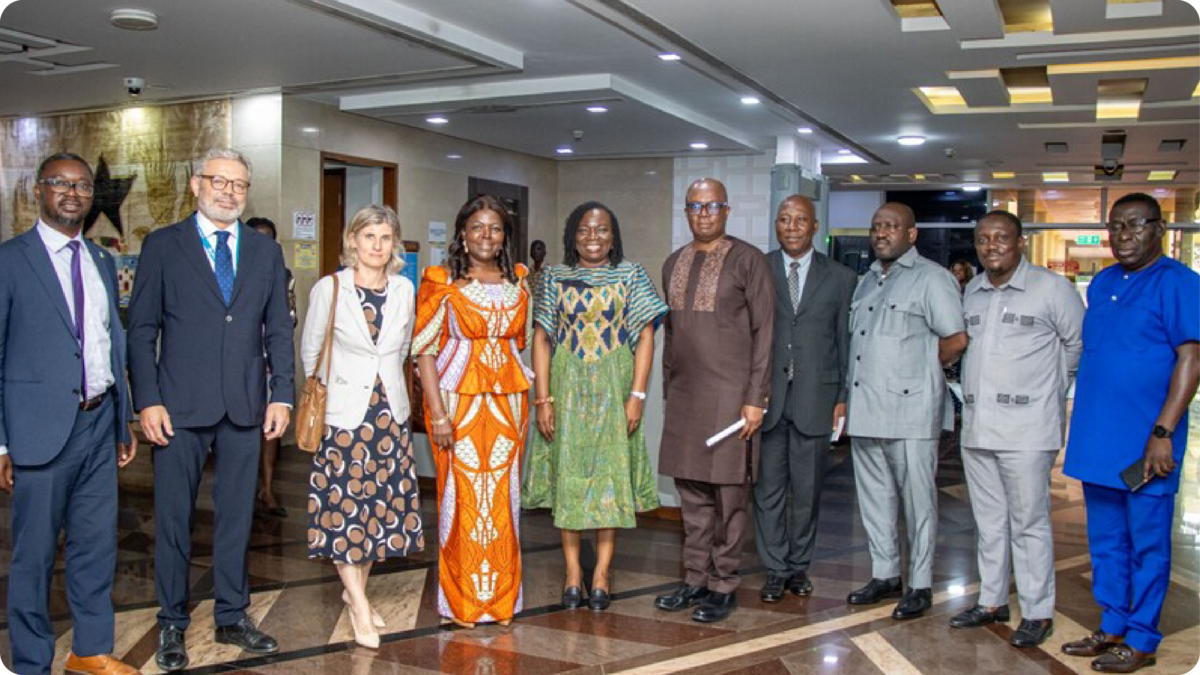
In 2024, Ghana laid the foundation for increased political commitment to water, sanitation, and hygiene.
The approval of the revised Ghana Water Policy and the signing of the Presidential Compact by then President Nana Addo Dankwa Akufo-Addo were major milestones.
"The Compact is a prime example of how strategic multisectoral partnerships can foster inclusive development and safeguard public health, while also advancing broader socio-economic objectives. This compact addresses critical gaps in access to clean water, adequate sanitation, and hygiene services – essentials that are fundamental to human dignity and development. The UN is committed to leveraging our collective expertise, resources, and partnerships to ensure the successful implementation of this Compact." - Ms Ifeoma Esther Charles-Monwuba, ad interim United Nations Resident Coordinator.
Our past work focused on collaborating with the Ministry of Sanitation and Water Resources. However, we realised we could make greater progress by working at the highest political level and emphasising the connection between water, sanitation and hygiene, and other policy priorities. Discussions between Sanitation and Water for All (who host the Heads of State Initiatives (HoSI)), HoSI partners (SWA, IRC, UNICEF, FCDO, Government of the Netherlands), and the Ministry led to greater confidence that a presidential compact was a realistic aspiration for Ghana. With our long-term presence in the country, we were seen as a key strategic partner.
"The compact is a bold financial commitment. In it, the government commits to mobilise resources to meet the financial requirement of US$ 1.7 billion per annum to meet national targets required to achieve SDG 6 by 2030." - Vida Duti, Director, IRC Ghana
We will continue to work with Ghana's new government (elected in late 2024) to ensure they fulfil their commitment to support the compact.
At district level, we continued to strengthen systems in Tano North, Asutifi North, and Upper Denkyira East districts. Through the WASH Systems Academy staff received training to build their knowledge of systems strengthening. This training is just one element of the broad support we provide for implementing their water, sanitation and hygiene master plans.
"What stood out for me was the opportunity to learn from the facilitators and interact with participants from different departments. The exchange of experiences was particularly enlightening. For example, hearing perspectives from health professionals and assembly staff allowed each group to understand the expectations and roles of the other. This cross-departmental dialogue was very insightful." - Samuel Essandoh, Municipal Planning Officer, Tano North Municipal Assembly.
"For me, the most useful part was the concept of system strengthening. I appreciated the holistic approach. It made me realise the importance of valuing and collaborating with all departments in the workplace. To achieve a common goal, all systems must be strengthened – if one is left behind, the overall vision cannot be realised. This understanding will be invaluable." - Prisca A. Dorsaah, Planning Officer, Asutifi North District Assembly.
In the Ahafo region, we worked with the Regional Coordination Council to finalise master plans for Asutifi South and Tano South districts. All of the six districts in the region now have these crucial documents, to accelerate collective action. Collaboration with the National Development Planning Commission (NDPC) also remains steadfast, enhancing sector-wide and cross-sector collaboration, and sharing of learning from district-based approaches and master planning including through this briefing note about scaling master planning.
Find out more about our work in Ghana
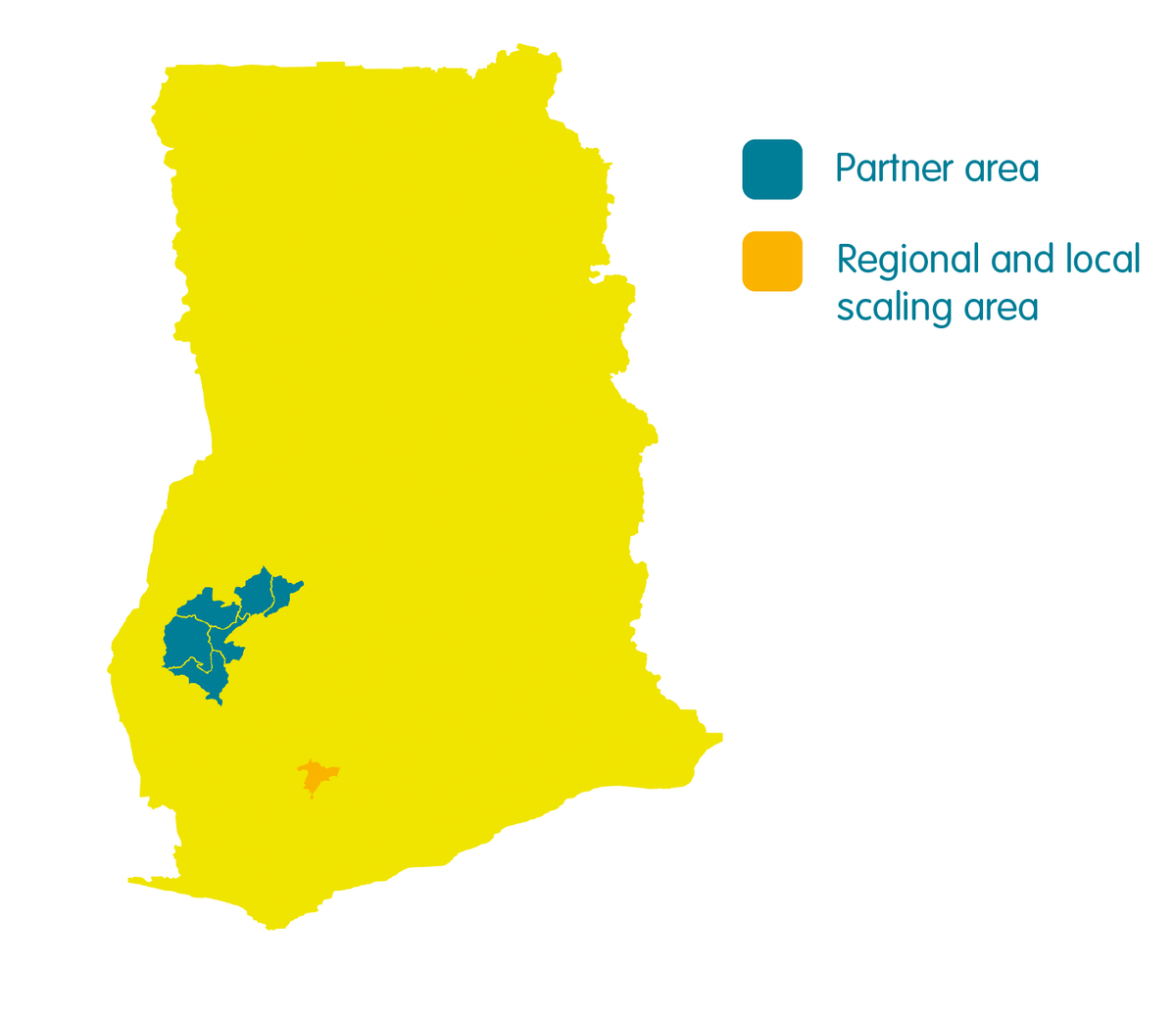 Ghana at a glance
Percentage of the country population with at least basic services (JMP)*
88% water | 29% sanitation | 42% hygiene
Partner districts
The context of our work
Highlight publications and outputs from 2024
Bangladesh | Burkina Faso | Ethiopia| India | Mali | Niger | Rwanda | Uganda
At IRC we have strong opinions and we value honest and frank discussion, so you won't be surprised to hear that not all the opinions on this site represent our official policy.
"The Compact is a prime example of how strategic multisectoral partnerships can foster inclusive development and safeguard public health, while also advancing broader socio-economic objectives. This compact addresses critical gaps in access to clean water, adequate sanitation, and hygiene services – essentials that are fundamental to human dignity and development. The UN is committed to leveraging our collective expertise, resources, and partnerships to ensure the successful implementation of this Compact." Ms Ifeoma Esther Charles-Monwuba, ad interim United Nations Resident Coordinator.
"The compact is a bold financial commitment. In it, the government commits to mobilise resources to meet the financial requirement of US$ 1.7 billion per annum to meet national targets required to achieve SDG 6 by 2030." Vida Duti, Director, IRC Ghana