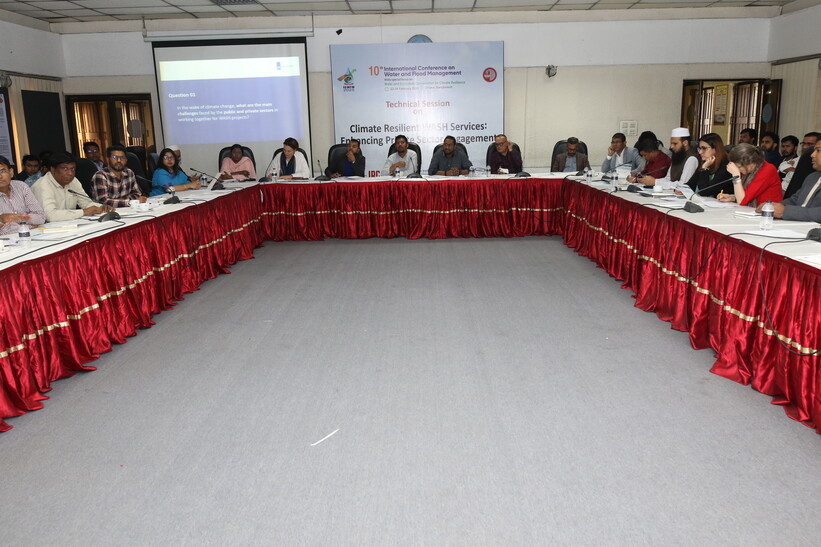
Climate-resilient water, sanitation, and hygiene services refer to water supply, sanitation, and hygiene systems that can withstand and adapt to the impacts of climate change. This involves strengthening infrastructure and promoting adaptive governance to support long-term resilience.
Published on: 05/03/2025
In Bangladesh, WASH services face significant risks such as water scarcity, infrastructure damage, and inadequate sanitation. Recognising these challenges, the Embassy of the Kingdom of the Netherlands (EKN) in Bangladesh, along with IRC, SNV, and Swisscontact, organised a t Conference 2025. The session focused on exploring opportunities, challenges, and actions for private sector involvement in enhancing climate-resilient WASH services. Participants included representatives from the private sector, commercial banks, government agencies, local government institutes, NGOs, development partners, and academia.
The session began with a presentation on key aspects of climate-resilient WASH and case studies showcasing private sector contributions in drinking water and sanitation. This was followed by an open discussion structured around three key questions, summarized below:
1. Challenges in Public-Private collaboration for WASH services
2. Lessons from successful Public-Private Partnerships
3. Strengthening governance for private sector engagement in WASH
Final thoughts
The private sector in Bangladesh has immense potential to enhance climate-resilient WASH services. Collaboration between micro and macro enterprises, manufacturers, and service providers is key to unlocking this potential. As national policies become more inclusive, stronger partnerships can help address regulatory and financial barriers, driving sustainable and resilient WASH solutions forward.
At IRC we have strong opinions and we value honest and frank discussion, so you won't be surprised to hear that not all the opinions on this site represent our official policy.