WASH in healthcare facilities is a no-brainer, it is an essential part of preventative care
Published on: 17/04/2025
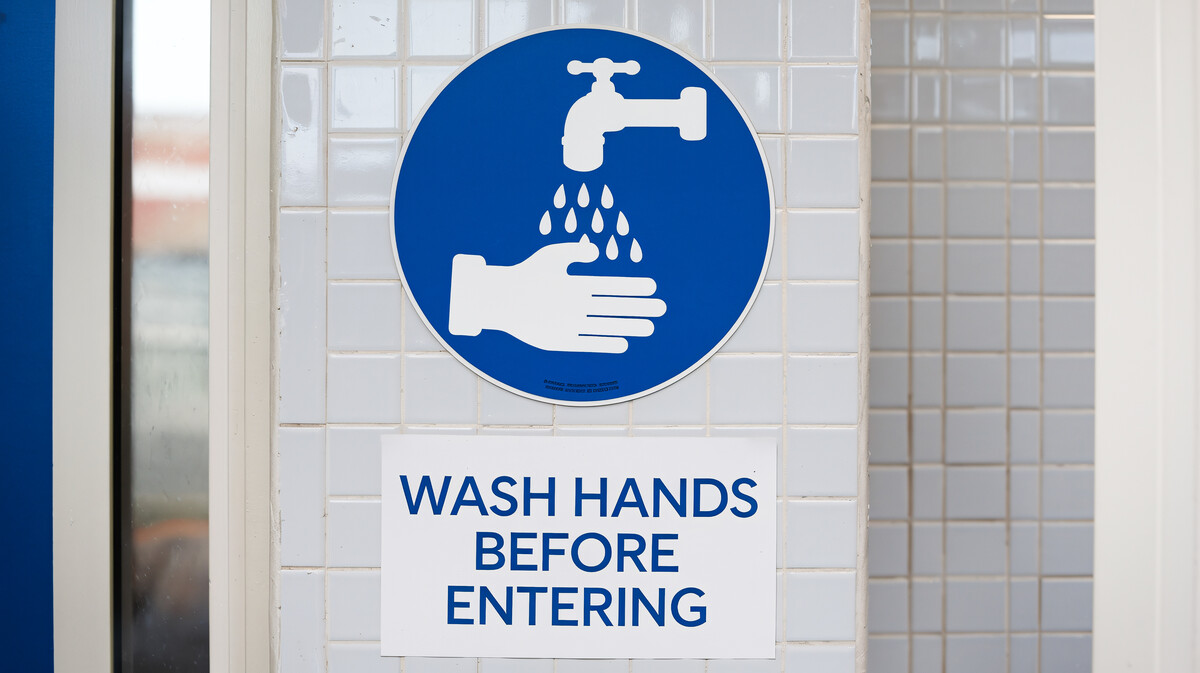
It's the early 1990s and as a newly graduated engineer and "young expert" of the European Commission I'm visiting one of our projects – a rehabilitation of Niamey, Niger's central maternity hospital. To someone still new to what poverty looks like up-close it's a shock. Filth and flies, blood-stained mattresses. Listless patients being cared for by small family groups.
We're ushered into a delivery room where a French surgeon is mid c-section. I'm appalled. By the dirt, but also by the fact that a surgeon is prepared to operate in this environment.
In retrospect, I’d see this as a formative moment in my own systems awakening – a microcosm of everything that is maddest about our approach to so much development aid. Rich world components (an expat surgeon, an MRI scanner) dropped haphazardly into poor world settings with little consideration for the broader system to which they are supposed to contribute.
In my recent Trumpquake blog I said I'd write more about the Africa Health Agenda International Conference (AHAIC), hosted by Amref, the Government of Rwanda and the African Union.
AHAIC was a huge, vibrant, African event with representatives from across the continent and beyond providing high quality and thought-provoking sessions. The opening speech was provided by Dr. Githinji Gitahi, Amref's Group CEO. Always an engaging and passionate speaker, he was on particularly good form as he summed up what the Trumpquake would mean for Africa's health sector. Beyond the need for self-reliance and strong national leadership, I'd paraphrase this as: more preventative care, less curative; keeping people out of hospitals rather than treating them in them; more safe water and sanitation, fewer MRI scanners.
This is a vision I believe in – and not just for low-income countries. The shameful neglect of population level public health interventions like mental health, clean air, decent housing, and water and sanitation is as true in the UK, where I live, as it is anywhere else.
The structure of the conference represented this well, with the bulk of the sessions being on broader, public-health related issues. That said, of the 38 parallel sessions that I could count, only one directly addressed water and sanitation - and kudos to WaterAid and Amref for putting this on.
Yet even here I was torn. The very good session on "The Power of WASH: Improving Maternal Health and Combating Infectious Diseases in Africa" dealt with an important and neglected area: the availability of water, sanitation and hygiene services in healthcare facilities. What sector professionals helpfully truncate to the user-friendly acronym WASH in HCF (irony intended!). The most recent data suggests that one in five healthcare facilities in Africa lack even the most basic water supply, while only a third facilitate basic hygiene (JMP). It is a genuinely important area.
Yet, the idea that this represents the primary arena where water, sanitation and health meet is, I believe, a fundamental category error. One that flies in the face of Dr. Gitahi’s call for a broader approach to health. There's nothing wrong with providing WASH in healthcare facilities, indeed it is (or should be) a no-brainer. What sick person wants to find themselves in the sort of filthy environment I mentioned earlier? How can we fight anti-microbial resistance if pregnant mothers are routinely given antibiotics to offset the unhygienic environment in which they give birth? That healthcare facilities are built without clean water and a way to dispose of waste safely should be abhorrent to any thinking person.
But the intersection of WASH and Health is, categorically, not found in these filthy places. WASH does not intersect with Health. WASH is part of health, it is the foundation of health. WASH keeps people out of hospital – as well as helping to speed their recovery when they are in hospital. If, as I do, you sometimes think in Venn diagrams; the WASH circle is fully contained within the health circle – not in a sliver where the two intersect! Clean water and safe sanitation are, arguably, the single most effective intervention keeping people well and out of hospital. Vaccines are the only competition. These elements are as (actually, more!) fundamental to healthy human lives as doctors.
It's therefore a clear and emergent indicator that something is seriously wrong in the Health Sector’s approach that so many healthcare professionals find themselves operating in the sort of filthy, disease-ridden environment with which I opened this blog.
Friend and long-time WHO insider Robert Bos traces the category error back to the 1970s and a cold war tussle over whether the World Health Organization (WHO) should focus on cure (the American/Northern perspective) or prevention (the Soviet/Southern perspective). The Americans won, and WHO has been run by doctors ever since. In fact, the Alma Ata Declaration of 1978 aimed to achieve "Health for All" by 2000 through Primary Health Care (PHC) and included safe drinking water and sanitation (DWSS) as key components. However, the Rockefeller Foundation later proposed "Selective Primary Health Care" focusing on medical interventions (including vaccination), sidelining DWSS. Despite this shift, the WHO continued its normative and technical cooperation efforts in DWSS under its constitutional mandate.
This failure to take public health, specifically WASH, seriously was implicitly critiqued in a recent evaluation of WHO's work on water and sanitation. Recommendation 3 of the report is to: "position the WHO WASH programme of work more strategically within and beyond WHO."
WHO is under intense pressure to act decisively in the face of the Trumpquake. One way it should do so is by re-focussing onto its normative and knowledge management role as the setter of standards and broker of trustworthy health information. Another should be to undo the misstep of the 1970s and position public (preventative) health at the heart of both its mandate and the support it provides to members.
As we look to a “post 2030 agenda” I will continue to argue and advocate for clean water and safe sanitation to be included as foundational elements of public health. And for public health to be treated as an equal partner to curative health within the “Health system”. And yes, that does mean working on WASH within healthcare settings, people shouldn’t leave hospital sicker than when you arrived due to poor hygiene. But, beyond this it means the broader health sector getting serious about engaging with and investing in basic public health, including safe water and sanitation: making keeping people out of hospital as important as caring for them in hospitals. For water and sanitation people, including IRC, it means reaching out to and engaging with health practitioners and leaders to develop a shared commitment to enabling long, healthy and productive lives. WASH in HCF is a good starting point – but let’s think and act bigger – together.
At IRC we have strong opinions and we value honest and frank discussion, so you won't be surprised to hear that not all the opinions on this site represent our official policy.