


Trends in water and sanitation and what they mean for Dutch development cooperation
Published on: 27/05/2025
Date: Thursday, 10 July 2025
Time: 16.00-17.30 CET
Location: Het Nutshuis, The Hague | Online
The funding landscape for international development cooperation is undergoing profound changes. Traditional bilateral donors are substantially reducing budgets, affecting how UN agencies and NGOs work. Humanitarian budgets are under severe strain, and a debt crisis affects countries that have borrowed heavily for infrastructure investments. At the same time, recipient countries are getting richer, with many achieving middle-income status. These changes have reduced the need to receive aid, increased the pressure to mobilise domestic resources, and have, and will, continue to undoubtedly affect how we deliver basic services and access to water for agriculture and industry.
More generally, we are also witnessing transformational economic, social, technological and environmental changes. Solar power is revolutionising rural water supply and irrigation in many countries in Africa and Asia. That creates possibilities to professionalise service delivery models or to provide professional support and to add value to markets. Whereas adaptation to climate change can be seen as requiring additional costs and investments, it is also an opportunity to strengthen the resilience of basic systems for water and sanitation service delivery or irrigation. Sanitation chains can be closed with what we once called wastes now collected and treated and safely disposed. And without yet knowing exactly how, it is certain that artificial intelligence (AI) will also introduce fundamental change.
The water world is not passively observing these changes, but rather has, and always will, continue to explore how to respond better to these broader trends and be more future-proof. Core to achieving this is leadership: understanding the trends, mapping out their possible implications, and taking deliberate and informed action.
IRC is conducting a trends-and-scenario analysis, to identify and quantify major developments that could affect water and sanitation investments and management over the coming decade — both across the sectors and in some selected countries. The future of water never exists in isolation, but rather is interdependent on wider sectors: such as agriculture, health, finance, energy, industry, humanitarian response and beyond.
The aim of this WASH debate is to explore some key trends and possible scenarios, and to discuss their implications for Dutch international development cooperation and its partner utilities, NGOs and others.
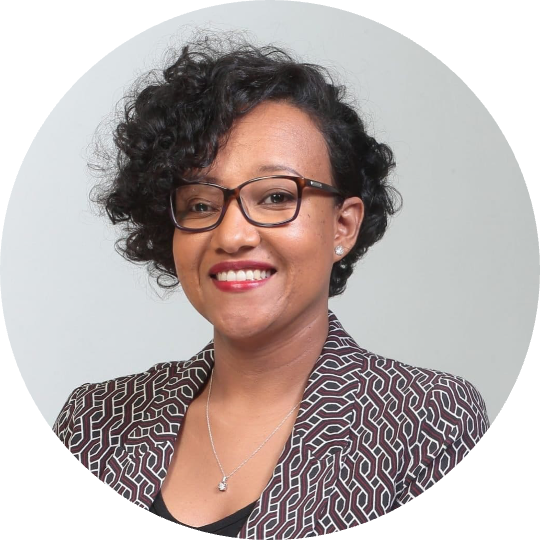 Bethlehem Mengistu, Global Coordinator of Agenda for Change
Bethlehem is a global WASH expert with over 20 years of experience in strategy development, multi-country programme leadership, and systems strengthening. She currently serves as the Global Coordinator of Agenda for Change, leading collaborative efforts to improve WASH systems and policy across Africa, Asia and Latin America. With a background in international development and law, Bethlehem has served as a trusted advisor to governments and development partners, bringing deep expertise in WASH, governance, gender equality, and water diplomacy.
 Maarten Gischler, Senior Water Adviser at Ministry of Foreign Affairs, Netherlands
Maarten works on water and climate resilience at scales ranging from transboundary river basins to local problem-sheds. He has been involved in all aspects of the Ministry's water portfolio, spanning WASH, water for food, water for energy, water for ecosystems, water and trade, etc. Maarten is currently based at the Ministry in The Hague, but has worked across West, East and Southern Africa; the Middle East, and; Central, South and South-East Asia over the past 35 years.
 Joep Verhagen, Global Lead Water and Urban, Global Center on Adaptation
Joep is a globally recognised and highly experienced climate resilience leader with a 25-year track record of delivering transformative and large-scale impacts on the ground through a well-balanced combination of high-level policy dialogues, strategy development, and the implementation of large-scale operations. He originated and led the implementation of the City Adaptation Accelerator, a highly innovative urban resilience building program in South Asia and Africa. He leads strategic policy dialogues at national levels, and the implementation of a technical assistance program to mainstream urban climate resilience in IFI investment operations with a combined value of more than US$4 billion. Recently, Joep has provided country-level policy support to the Resilience and Sustainability Fund (RSF). While at the World Bank, Joep co-lead the US$1.5 billion clean India program along the US$25 million Technical Assistance program. He also worked for IRC for eight years between 2005 and 2013.
 Angela Huston Gold, Associate, IRC
Angela joined IRC in 2016 as a programme officer and researcher focused on innovative approaches to measuring WASH systems strength. She moved to the role of IRC Associate in 2024 and has supported IRC's systems leadership and strategic engagements beyond the WASH sector. She has a Ph.D. in Civil Engineering from McGill University and recently completed a professional masters in heterodox economics and political ecology from the Autonomous University of Barcelona. Angela is experienced in dialogue facilitation and inclusive multi-stakeholder methods for strategic foresight
 Patrick Moriarty, CEO, IRC
Patrick is a Civil Engineer by first degree and Water Resource Management expert by main experience, with an emphasis on interdisciplinary work on water service delivery and local water governance. Patrick has over 25 years experience of a broad range of issues around water, its management and its use in improving human well-being, predominantly in Africa and South Asia. Patrick's main area of interest is in how IRC can ignite and support sector-wide change that brings improved services (and more sustainable water resource use) to all.
Photo by Ivan Bandura on Unsplash.