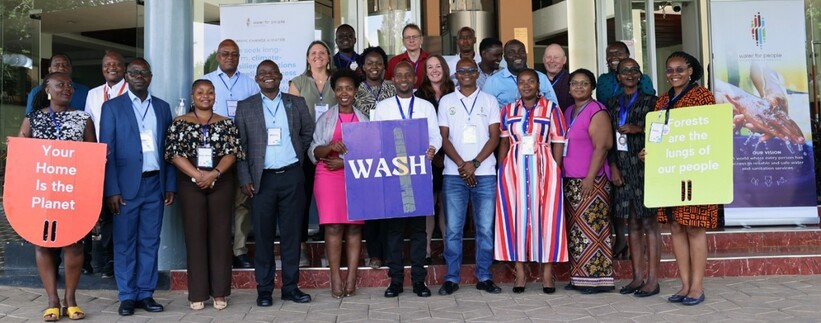
Participants of the wordkshop
The workshop and field visit in Rwanda significantly enhanced participants' capacity to deliver climate-resilient WASH services by deepening their knowledge, fostering collaboration, and showcasing practical implementation.
Published on: 28/03/2025
In a significant step towards enhancing climate resilience in water, sanitation, and hygiene (WASH) services, a five-day training workshop was held in Rwanda from February 24 to 28, 2025. The workshop, organised by the Water For People African Regional Office, aimed to equip Water For People and IRC staff with the knowledge and skills necessary to mainstream climate resilience across all programmes and projects by 2026 and implement risk-based adaptations by 2027. This initiative is crucial for unlocking climate finance and ensuring sustainable and equitable WASH services for all.
In preparation for the workshop, participants evaluated their country programmes' capacity, considering the following aspects:
From this evaluation, we learned that IRC Ethiopia is good at team capacity and budget allocation but should strengthen its efforts in improving most aspects of climate-resilient WASH engagement.
The workshop used the basic climate-resilient WASH course from the WASH Systems Academy and covered the following topics:
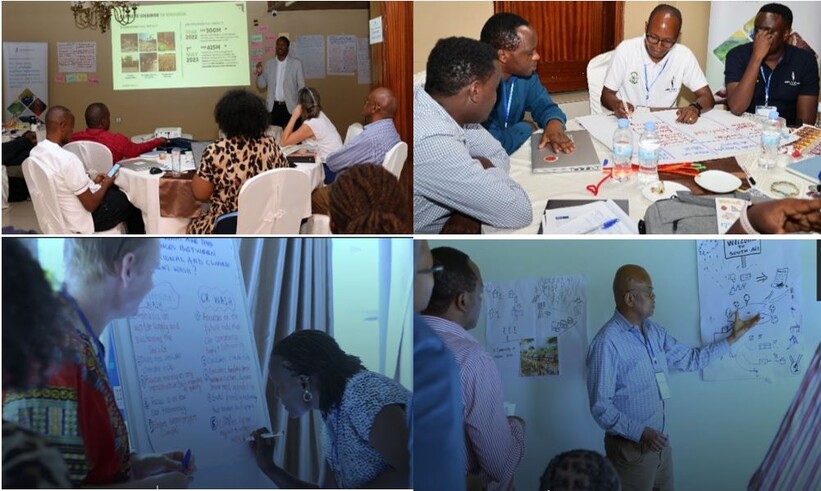
Participants shared their country’s context on various aspects of climate resilience through PowerPoint presentations, world café, poster presentations, panel discussions, interviews, and group exercises. Country teams collaborated with lead facilitators Kelly Latham from Water For People and Arjen Naafs from IRC, taking on facilitation roles to create an interactive and engaging learning environment. My takeaway from this is the use of multiple approaches to make the event interactive.
Guest speakers from the Rwanda National Organization of Users and Survivors of Psychiatry, Green Rwanda, and the Ministry of Water and Environment of Uganda shared their experiences on gender and social inclusion, highlighting their success in mobilising climate finance from various sources. They emphasised the importance of the WASH sector learning the language of the climate sector to secure its share of climate finance.
The field visit helped the team get to know Rwanda better. The country boasts an impressive landscape, greenness, and cleanliness.
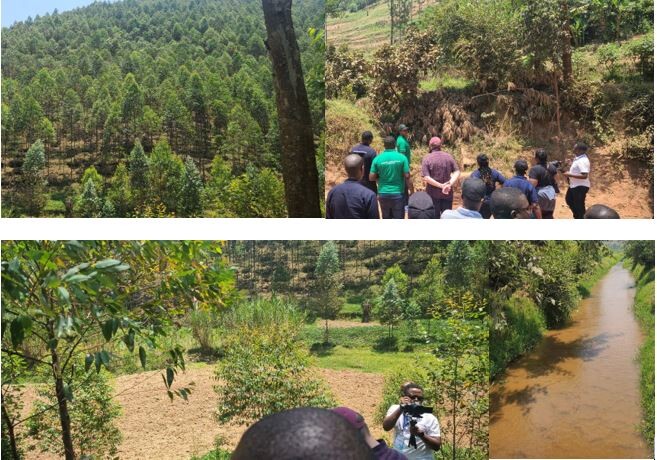
The team embarked on a visit to Gicumbi district in Northern Rwanda to gain first-hand insight into the adaptation and mitigation measures spearheaded by the Green Gicumbi Project, one of the projects under Green Rwanda. During our visit, we were impressed by the district's concerted efforts and strategic collaboration with various partners aimed at enhancing basic drinking water access. As the mayor of Gichmbi said, the district has made substantial progress, increasing water access from 60% in 2016 to 100% by 2024. This achievement is underpinned by the district's commitment to allocate matching funds up to 45%, ensuring that these essential services reach every resident.
The Green Gicumbi Project Manager highlighted that the main objective of the project is to enhance the adaptive capacity of the community that lost 250 km² of land due to flooding and landslides. The project interventions include watershed protection, climate-resilient agriculture, sustainable forest management, promoting the use of biogas, improved cook stoves, and increasing household income using improved cow breeds, coffee and tea plantations, and honey farming. The project has achieved impressive results through collaboration with partners and the local community.
The Green Gicumbi Project promotes afforestation and replaces old forests with more productive ones to improve residents' incomes and livelihoods. Trenches were excavated along the hillsides and eucalyptus trees were planted along these trenches. River training and nature-based solutions to protect against river erosion have resulted in evident changes.
The team also visited a water supply system constructed by Water For People, which pumps water from a spring source to a reservoir over 400 meters high. The high construction quality and inclusion of latrine and handwashing facilities demonstrate Rwanda's comprehensive approach to WASH.
Another notable learning was the water management at a resettlement site for a community relocated from an area affected by a landslide. Runoff from roofs is collected and stored in underground storage for agricultural use, addressing water scarcity, supporting sustainable agriculture and preventing soil erosion.
A key takeaway from our the visit was the performance contract that incentivises best performers and penalises underperformers, which is signed between the district mayor and the province. This contract is cascaded down to staff at various levels, fostering a culture of accountability and ensuring the goals set are diligently pursued and achieved. The structured approach to accountability and collaboration serves as an important lesson for effective project implementation and community development.
The workshop significantly enhanced participants' capacity to deliver climate-resilient WASH services by deepening our knowledge, fostering collaboration, and showcasing practical implementation. As a result, we are now better equipped to integrate climate resilience into programmes and projects, ensuring sustainable and equitable WASH services for all. Each country programme developed a six to 12-month action plan, which includes incorporating climate-resilient WASH roles into staff job descriptions, mainstreaming climate-resilient WASH into ongoing projects by 2026, and implementing risk-based planning from 2027. Specifically, IRC WASH Ethiopia committed to encouraging staff to complete the climate-resilient WASH course, contributing to the design of ONEWASH Phase 3, integrating climate-resilient WASH into the South Ari master plan, contributing to the revision of the building block monitoring tool, and contributing to the revision of the National Determined Contribution led by the Ministry of Finance.