Participants practise using mWater (Ph IRC Burkina, 2024)
Rural water operators in seven regions of the country learn to use tools to improve the technical and financial monitoring of lease contracts
Published on: 09/12/2024
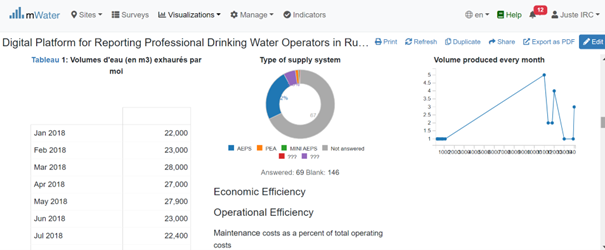
The primary goal of this session was to enable participants to master the use of mWater, a leading platform for monitoring water services, with a focus on:
By the end of the workshop, operators were trained on entering semi-annual operational data and generating automatic technical and financial reports, marking a key step towards more transparent and efficient water service management.
The workshop brought together around 30 participants, including operators, representatives from the Regional Directorate for Water and Sanitation (DREA), ONEA, and IRC. The methodology integrated theoretical sessions, practical demonstrations, and interactive computer exercises. Participants were introduced to the main functionalities of mWater, such as data entry, visualization, and automatic report generation.
Feedback from participants highlighted the platform's usefulness and the relevance of the training to their daily work. A majority now feel confident in using mWater independently and even plan to train their colleagues.
To consolidate the gains, several actions are planned:
This workshop represents a major milestone in improving drinking water services in Burkina Faso. By integrating mWater into their practices, operators now have an innovative tool to tackle the challenges of managing drinking water supplies.