Vida opens Side Event on Professionalising Rural Water Services in Ghana
Reflections from 2025 Mole WASH Conference side event
Published on: 24/12/2025
In November 2025, IRC Ghana, with CONIWAS and support from the Conrad N. Hilton Foundation hosted a side event on strengthening rural water services through professionalisation. Led by the Rural Water 'Utilitisation' Project (RWUP) partners, the session highlighted CWSA's transition to a public utility, shared findings on safely managed services, and explored strategies for structured management, local capacity, and accountability, concluding with an interactive discussion.
Access to safe and sustainable water remains a critical development priority for Ghana. While rural water coverage has improved significantly, from 27% in 1992 to 61.87% in 2023, many communities continue to face challenges with reliability, functionality and long-term sustainability. These issues stem from weak governance structures, limited technical capacity and inadequate financing.
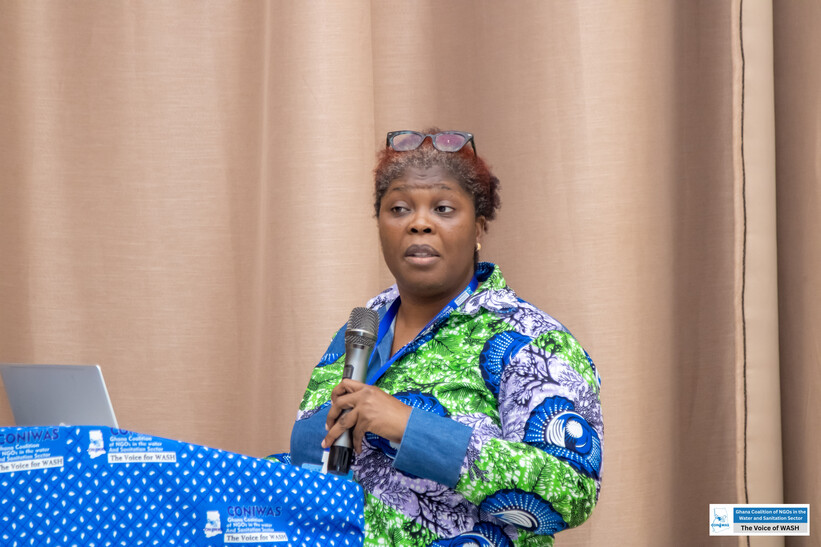
vida_opens_mole36_side_event_on_professionalising_rural_water_services_in_ghana.jpg
Vida opens Side Event on Professionalising Rural Water Services in Ghana
The Mole XXXVI WASH Conference side event on "Professionalising Rural Water Services in Ghana" provided an invaluable platform for stakeholders to deliberate on the future of rural water service delivery. The discussions underscored the urgent need for systemic reforms to address persistent challenges in governance, technical capacity and financial sustainability. This reflection captures key insights, observations and lessons drawn from the event.
vero_of_irc_presenting_session_overview.jpg
 Veronica Ayi-Bonte, IRC Ghana, presenting the session overview
The event highlighted a fundamental shift from traditional community-led management models to structured, professionalised systems. Historically, rural water systems have relied on volunteer-based governance, which, while fostering local ownership, has proven inadequate for managing complex infrastructure and ensuring long-term sustainability. Presentations by IRC Ghana and Community Water and Sanitation Agency (CWSA) revealed that poor maintenance culture, obsolete technologies and mounting debts have left many systems vulnerable.
The study on safely managed water services was particularly revealing. Despite progress at the national level – 43% of the population now has access to safely managed water – rural areas lag significantly at just 17%. This disparity reflects systemic barriers such as high upgrade costs, weak policy directives and limited district-level incentives. Recommendations for setting national targets, integrating safely managed objectives into district plans and strengthening technical capacity resonated strongly as practical steps forward.
cwsa_ceo_presenting_the_case_for_reforms.jpg
 Vincent Kuagbenu, CEO of CWSA, presents the case for reforms
A key highlight of the event was the candid response from CWSA's Chief Executive Officer (CEO), Vincent Senam Kuagbenu, during the interactive session. His emphasis on accountability and the application of Public Financial Management laws to water systems was a critical reminder that water, like education and health, is a public good requiring structured oversight. The planned transition of CWSA into Community Water Company Limited signals a bold move towards consolidating management under a unified framework.
CWSA's Director of Partnerships, Dr Ato Quansah, highlighted the need to shift from community-based management of rural water systems to a professional utility model:
"Community management works for new systems but fails as infrastructure ages and technical challenges arise. Safely managed water requires compliance with quality standards, which communities lack capacity to ensure."
Since 2017, CWSA has pursued this transition, but strong legal backing is needed to consolidate publicly funded systems under one framework. The reform also aims to move from standpipes to household connections, supported by local staff recruitment and capacity building. Collective commitment from policymakers and partners is essential to achieve sustainable, safe water services.
However, the reform raises important questions about inclusivity and adaptability. While the utility model promises improved standards and accountability, its success will depend on adequate financing, community buy-in and lessons learned from urban utilities such as GWL. The CEO's assurance that legislative processes are underway and that mismanagement will attract prosecution reflects a strong commitment to transparency and to inspiring donor confidence.
elder_modoc_making_point_in_support_of_the_reforms_at_the_session.jpg
 Awudu Y. O. Modoc, Executive Director of APDO, supports the reforms
The event demonstrated the power of multi-stakeholder engagement. Contributions from WSUP and other partners showcased practical interventions – such as Standard Operating Procedures, asset mapping and competency frameworks – that can operationalise professionalisation. These tools are not merely technical; they represent a cultural shift towards efficiency and customer-centred service delivery.
However, the discussions also revealed underlying tensions between regulation and service provision. Should CWSA act as a regulator or a provider? The policy direction is clear, as stated by the CWSA CEO:
"Government policy already states that the Community Water and Sanitation Agency will be reformed into Community Water Company Limited. This is a clear policy direction supported by past and present leadership. The focus now should be how to get communities to buy into this new thinking."
Although the policy direction appears clear, several questions remain unresolved among stakeholders, warranting further dialogue. Additionally, the financial viability of the utility model is a pressing concern, given the existing debt burden and infrastructure gaps.

ag._water_director_closing_the_session.jpg
 Final insights from Kwabena Gyasi-Duku, Ag. Water Director, Ministry of Works, Housing and Water Resources
The Mole XXXVI side event was not just another discussion session; it was a call to action. Professionalising rural water services is a complex but necessary journey that demands collaboration, innovation and unwavering commitment to equity and sustainability. As Ghana moves towards universal WASH coverage, the insights from this event provide a roadmap for transforming rural water service delivery into a resilient, accountable and customer-focused system.
Community management works for new systems but fails as infrastructure ages and technical challenges arise. Safely managed water requires compliance with quality standards, which communities lack capacity to ensure
Dr Ato Quansah, CWSA's Director of Partnerships
Government policy already states that the Community Water and Sanitation Agency will be reformed into Community Water Company Limited. This is a clear policy direction supported by past and present leadership. The focus now should be how to get communities to buy into this new thinking
Vincent Kuagbenu, CEO of CWSA