A partnership to drive change
Published on: 22/05/2025
In the heart of rural Ghana, a quiet revolution is underway—one that promises to reshape how water services are delivered, managed, and sustained for generations to come. CWSA initiated policy reforms in 2017 with the aim to professionalise the operations and management of piped water systems and expand CWSA's mandate to transform into a public utility organization.
Since the 1990's the Community Water and Sanitation Agency has facilitated the delivery of the National Community Water and Sanitation Programme (NCWSP) for the provision of safe water and related sanitation services to rural communities and small towns, coordinating all stakeholders and interventions. Over the years, the NCWSP has made significant progress, access to water supply in rural communities and small towns in Ghana has risen from 27% in 1992 to 61.87% in 2023, contributing to improvements in water-related sanitation and hygiene.
Despite these achievements, the sustainability of community-managed systems began to falter, leading to challenges such as non-functional or partially functioning water systems, repeated breakdowns, increasing water losses, and inadequate community capacity to manage complex systems.
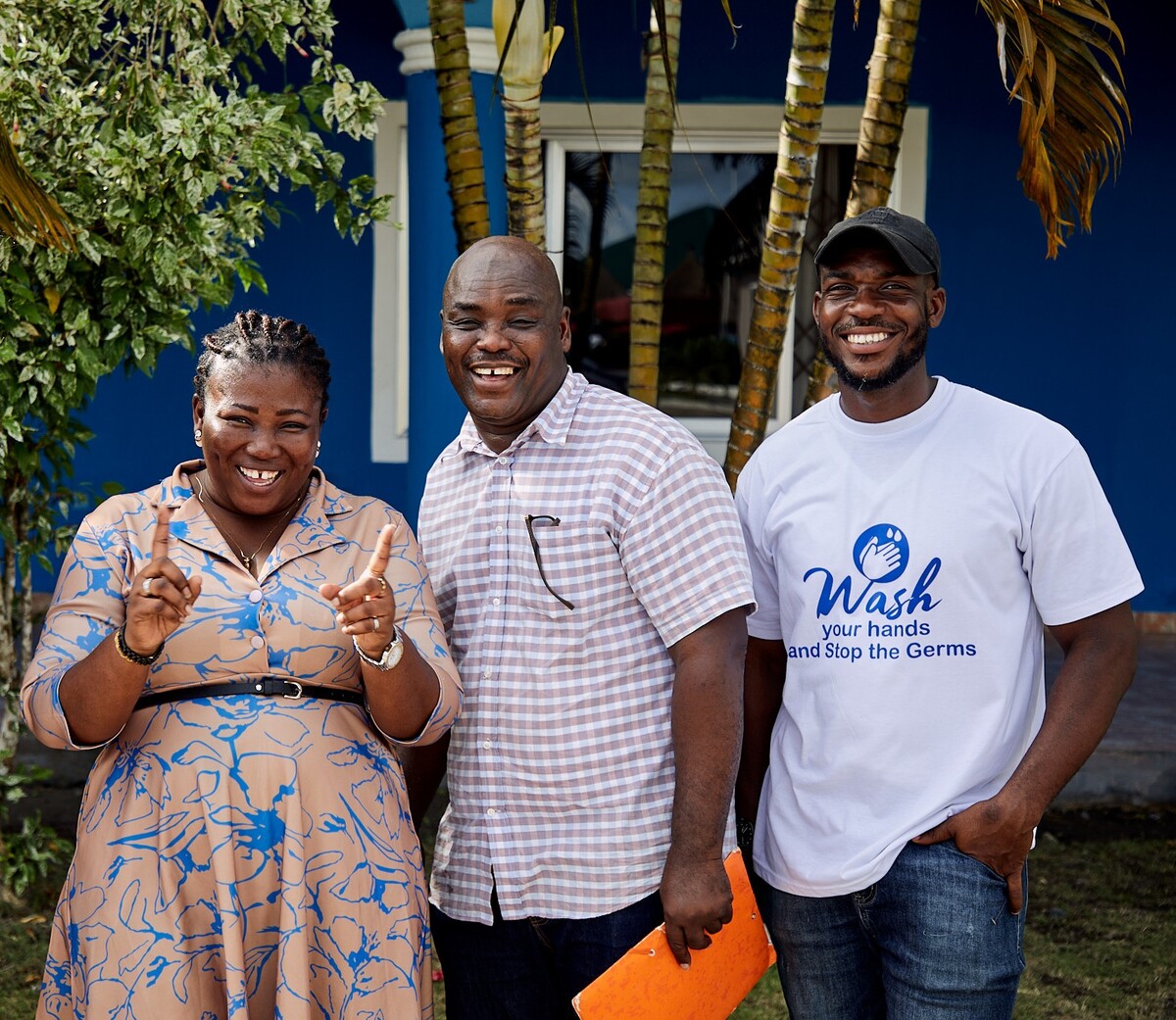 Linda Dedoo, CWSA with Abubakari Wumbei, IRC and Michael Selassie Adrah, WSUP
Since 2022, the Conrad N. Hilton Foundation through the Rural Water Utilisation Project (R-WUP), has supported a partnership between CWSA, IRC, Safe Water Network, and WSUP, to facilitate CWSA's transition to a utility in the Western region of Ghana. The publication "Professionalising Water Services in the Rural Water Sub-sector of Ghana: A Partnership to Drive Change " documents the progress so far in the partnership. It shares stories from communities like Esiama, partners and CWSA on what the partners aimed to achieve, what they accomplished, and the stories they are most proud of. It captures the challenges faced by the Community Water and Sanitation Agency (CWSA) and partners and highlights the dilemmas within the team, and how these have been impacted by the reform process.
The publication identifies key questions that remain outstanding for the future - the need to finalise legal frameworks, clarify operational models, ensure financial sustainability, and scale the reforms nationwide. It calls on all stakeholders - government, donors, NGOs, and communities to support this vision and help drive lasting change. This is more than a technical reform; it is a movement towards dignity, equity, and sustainability in rural water services.
You can read the full publication here: Professionalising Water Services in Ghana
Everyone should support CWSA reforms for sustainability of water system management. We have no other choice. - Theodora Adomako-Adjei, Extension Services Coordinator, CWSA Head Office
For every change, you need to look at the people who are going to be involved. Engaging staff from the start is essential for successful transitions. - Frank Kettey, Country Manager, WSUP
Water is life, but more importantly, safe water is life. - Joseph Owusu Ansah, Head of Engineering and Technical Services, Safe Water Network
Systems leaders drive change. Be part of the reforms to transform the water sector of Ghana. - Vida Duti, Country Director, IRC Ghana