Reflecting on the past seven years of experience
Published on: 19/03/2025
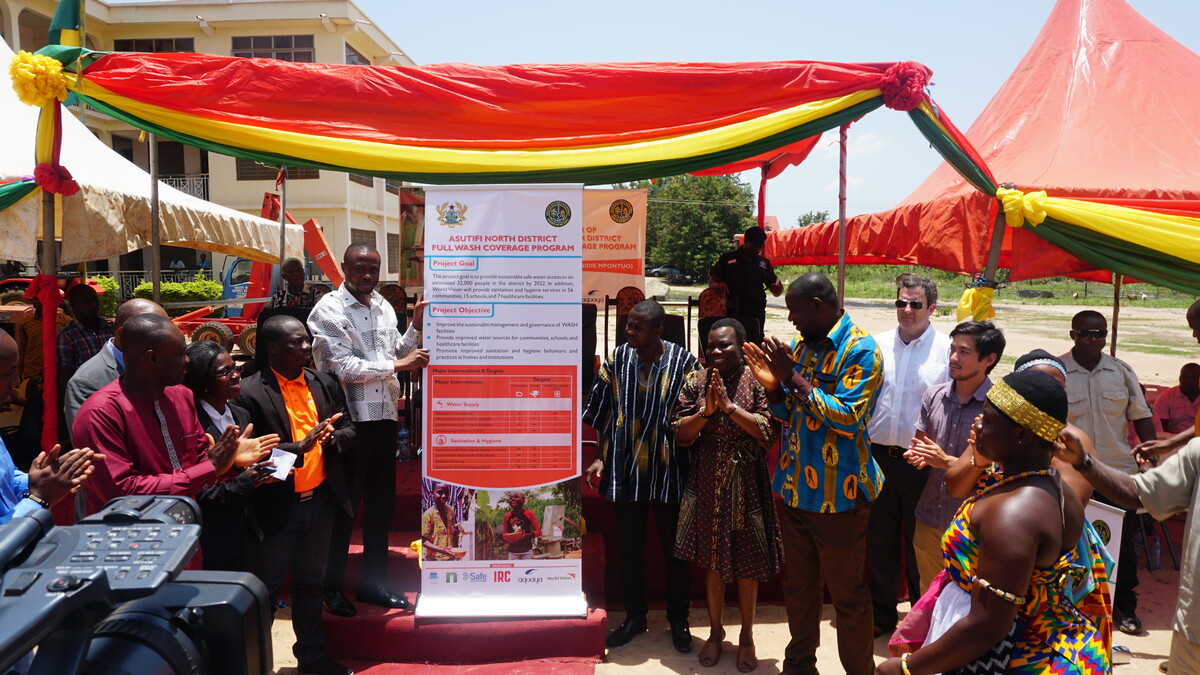
Achieving universal access to water, sanitation, and hygiene (WASH) requires more than just isolated interventions—it demands a system-wide approach that is both sustainable and scalable. In Ghana, the Asutifi North district-based model has emerged as a promising blueprint for achieving this goal.
With IRC's initial coordination of a diverse partnership and financial support from the Conrad N. Hilton Foundation, Asutifi North launched a district-based WASH initiative in 2017, built on a master planning approach. This approach integrates government leadership, multi-stakeholder collaboration, and robust monitoring systems to ensure sustainable service delivery.
Reflecting on the past seven years of experience, we recently published two briefing notes. One introduces lessons learned and pathways to scale in various geographies. The other briefing note provides a practical reflection on how the Asutifi North approach is being replicated to achieve broader impact beyond a single district in Ghana. It explores the successes, challenges, and key lessons learned in transitioning from a localised pilot to a regional and national approach. It introduces four distinct pathways to scale:
Key lessons documented from the Asutifi North experience for scaling WASH services include:
By applying these lessons, Asutifi North District, the Ahafo Region, and other selected districts are progressing towards universal WASH access and contributing to the broader Sustainable Development Goal (SDG 6) in Ghana.
These insights are crucial for shaping sector discussions on scaling effective WASH solutions. By examining the district’s journey, it provides a roadmap for other regions and countries looking to adopt a similar approach.
The briefing notes serve as a guide for policymakers, practitioners, and development partners seeking to transition from successful pilots to large-scale, sustainable impact. As Ghana moves forward, the lessons from Asutifi North provide a powerful example of how structured, district-led approaches can drive national progress.