Stakeholders from across the country at the National Learning Exchange
Insights from the National Learning Exchange 2025
Published on: 16/09/2025
Ghana's commitment to achieving universal access to Water, Sanitation and Hygiene (WASH) by 2030 was reaffirmed at the National Learning Exchange (NLE) held in Accra, under the theme "Strengthening Local Systems to Deliver Safe and Sustainable WASH Services for All." Convened by IRC Ghana in collaboration with the National Development Planning Commission (NDPC), WaterAid Ghana, and the Coalition of NGOs in Water and Sanitation (CONIWAS), the event brought together over 95 stakeholders - including seventeen municipal and district assemblies (MDAs), ministries and agencies, development partners, civil society organisations, private sector, and the media - to review progress, share lessons from district-wide WASH interventions, and develop practical recommendations to strengthen planning and scale successful approaches.
A key segment featured engagement with Municipal and District Chief Executives (MDCEs) from Tano North, Asunafo North, Asutifi North, and Tano South, who shared their experiences in leading WASH master planning since assuming office this year. Their message was clear: local leadership and ownership are essential for sustainable WASH outcomes.
"If we don't lead, no one else will. WASH must be part of our political priorities, not just donor projects," said the MCE for Asunafo North, stressing the need for political will and integration of WASH into district development plans.
The MDCEs discussed how decentralised planning empowers districts to define priorities, attract partners, and ensure continuity beyond external support. They emphasised the importance of community ownership, depoliticised facility management, and collaboration with traditional leaders.
"When the community owns it, it lasts. We must take politics out of water," remarked the DCE for Asutifi North.
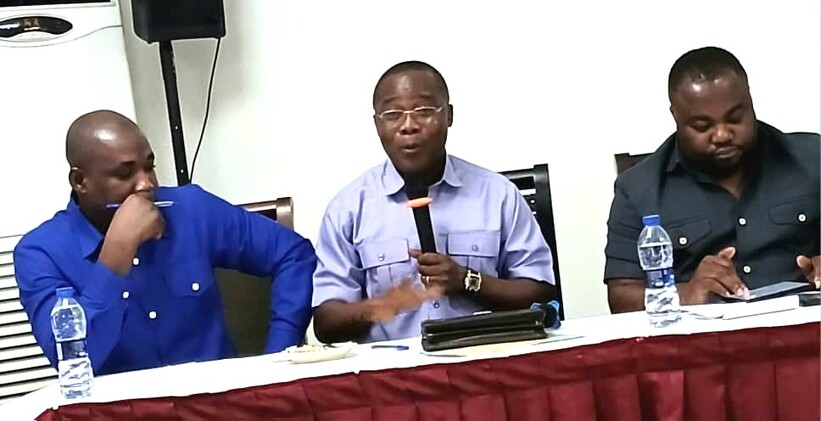
The MDCEs, committed to sharing lessons and influencing their peers through local and national platforms. This peer-to-peer learning exchange is seen as a key strategy for promoting and scaling successful practices and fostering a culture of collaboration.
"We must influence our peers - what works in one district can inspire others," said the MCE for Tano North.
District updates
Nine Municipal and District Assemblies (MDAs) - including Tano North, Asunafo North, Asutifi North, Asutifi South, Asunafo South, Tano South, Bongo, Krachi Nchumburu and Ellembele -shared their WASH master planning experiences. These plans are increasingly being integrated into Medium-Term Development Plans (MTDPs), ensuring alignment with broader development goals and budgetary frameworks. Achievements ranged from borehole construction and solar-powered water systems to behaviour change campaigns and stakeholder engagement. However, challenges such as funding gaps, low sanitation coverage, and weak maintenance systems were recurring issues.
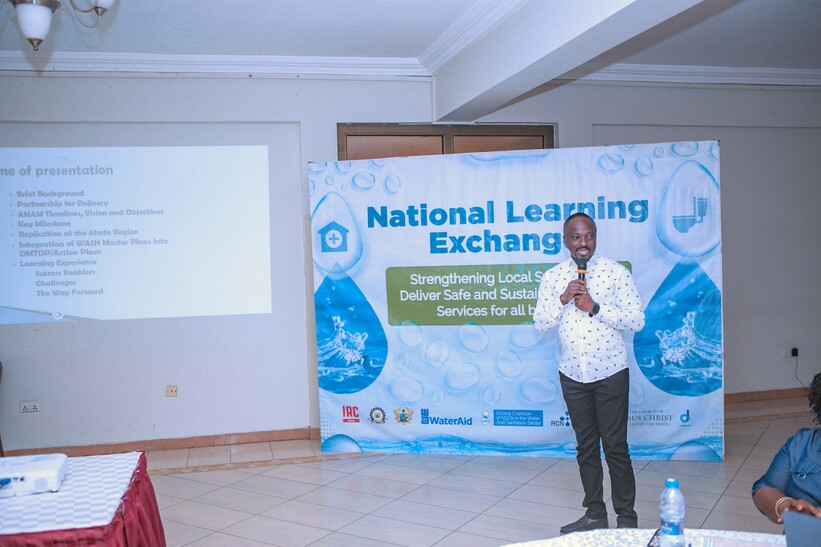
The Asutifi North Ahonedie Mpontuo (ANAM) model, now scaled across the Ahafo Region, was cited as a successful example of district-wide planning. It combines infrastructure development with behaviour change, monitoring, and stakeholder engagement.
While infrastructure remains a priority, MDAs called for greater emphasis on sanitation, hygiene promotion, and behavioural change - often underfunded yet cost-effective interventions.
"We build toilets, but without behaviour change, they won't be used properly. Hygiene must go hand in hand with infrastructure," noted Bismark Asante, Asutifi North District Planning Officer.
The Ahafo Regional Economic Planning Officer, Jacob Ntiamoah presented an integrated regional WASH model, demonstrating how coordinated planning and partnerships can drive progress across multiple districts.
WASH and NTDs session
The WASH and Neglected Tropical Diseases (NTDs) session featured contributions from the Upper Denkyira Municipal Assembly and Health Department, Bongo District Health Department, and the National NTD Unit of the Ghana Health Service (GHS). Led by Dr. Yaw Adusi-Poku, the session explored the intersection of WASH and NTDs. Case studies from Upper Denkyira East and Bongo District illustrated how integrated planning and community engagement can reduce disease prevalence and improve health outcomes.

An expert panel from national and district levels called for stronger surveillance, behaviour change communication, and the adoption of the One Health approach to address the environmental and social dimensions of NTDs.
Sector Reflections
The three-part session of the NLE began with reflections and remarks from sector partners, including a welcome address by Vida Duti, IRC Ghana Country Director, who emphasised the urgency of addressing service gaps and strengthening regulation. Representatives from the Ministry of Local Government, Chieftaincy and Religious Affairs, WaterAid Ghana, CONIWAS, and Development Partners echoed the need for transparency, collaboration, and alignment with national planning frameworks.
Dr. Audrey Amoah, Acting Director-General of NDPC, delivered the keynote address, highlighting WASH as a cornerstone of public health and national development. She called for strengthened collective action to achieve Sustainable Development Goal 6 (SDG 6).

Learning sessions provided an overview of Ghana's WASH SDG status and systems strengthening. Patience Ampomah, NDPC Senior Planning Analyst, presented Ghana's progress on SDG 6, noting improvements in access to basic drinking water but persistent challenges in sanitation and hygiene. She stressed the importance of integrating WASH master plans into MTDPs and called for improved data systems and local accountability.
Veronica Ayi-Bontey, IRC Ghana Programme Manager, underscored the need for people-centred systems, inclusive governance, and adaptive planning. She highlighted IRC's nine building blocks for WASH systems and the role of technology in enhancing service delivery.
On scaling District-Wide planning, Jeremiah Atengdem of IRC Ghana presented pathways and lessons from scaling the Asutifi North master planning model. He emphasised the need for a national WASH financing strategy, standardised planning tools, and capacity building at the district level.
Recommendations and Way Forward
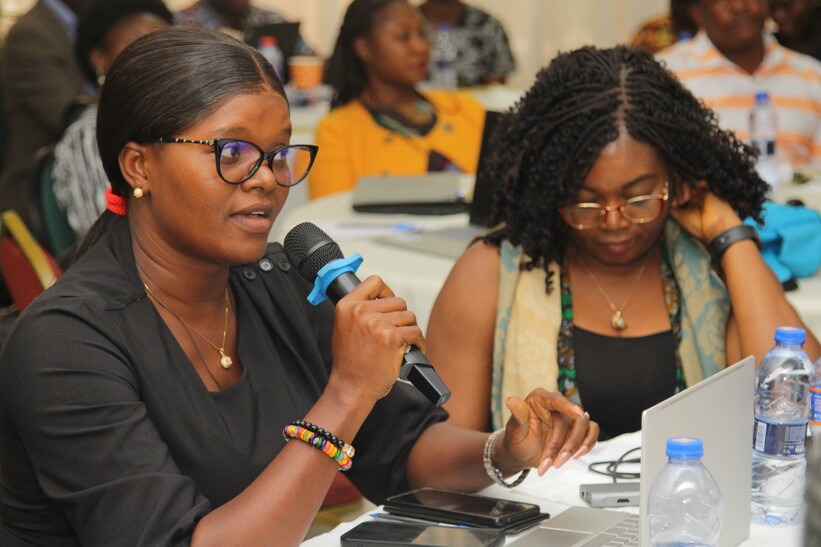
The session concluded with actionable recommendations, noted by the Ghana Coalition of NGOs in Water and Sanitation:
The National Learning Exchange highlighted that sustainable WASH delivery depends on strong local systems, committed leadership, and inclusive planning. While development partners play a supportive role, empowering districts to lead and collaborate is essential. The insights and recommendations shared by MDAs offer a clear roadmap for improving WASH access and scaling successful approaches. In her closing statement, IRC Ghana Country Director, Vida Duti, said:
"Now is the time to act - let's turn these lessons into action for lasting impact and ensure every community has access to safe and sustainable WASH services."