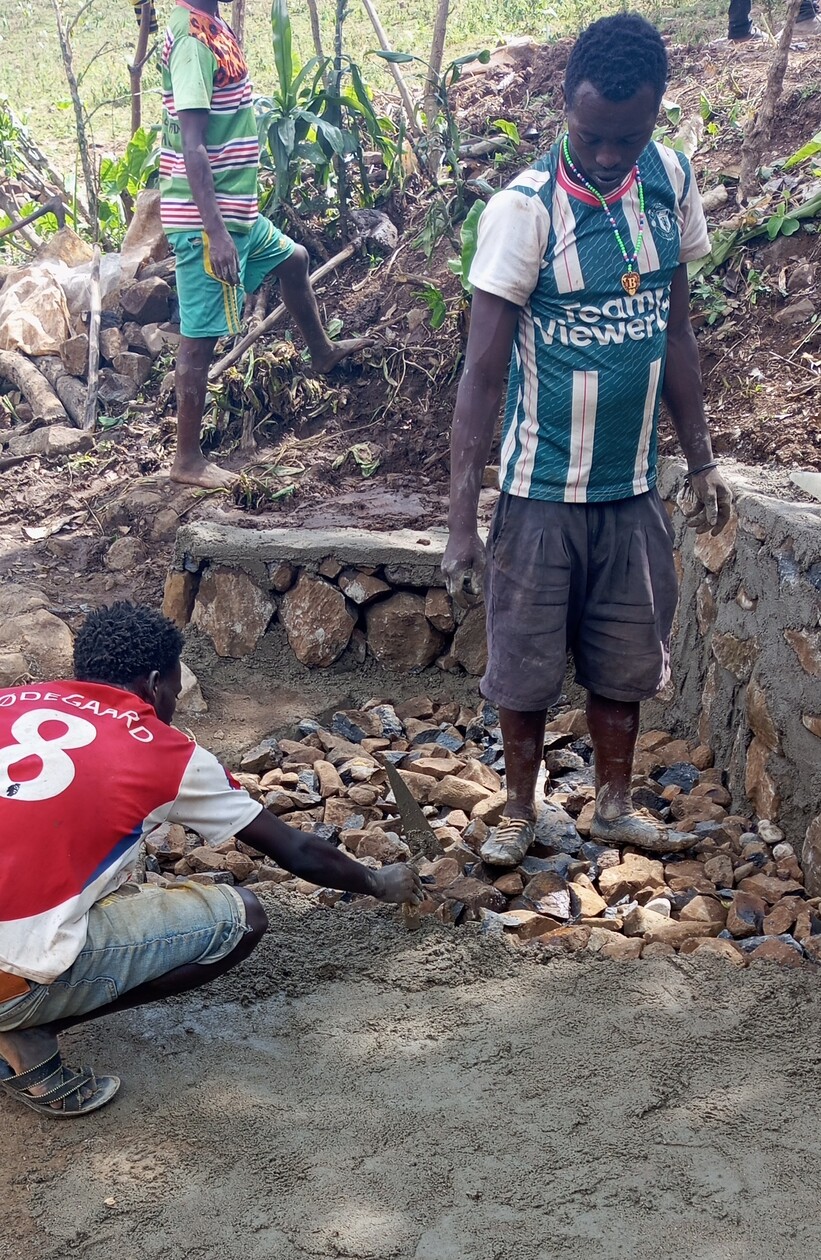
Hands-on water maintenance training in action
By strengthening water, sanitation, and hygiene (WASH) enterprises, South Ari Woreda is taking a significant step towards improving WASH services, contributing to healthier communities and measurable progress towards national and global WASH goals.
Published on: 14/01/2026
IRC WASH, in collaboration with the South Ari Woreda Health Office and the Water, Energy and Mines Office, is conducting capacity building training for water, sanitation and hygiene (WASH) Small and Micro Enterprises (SMEs) at Gazer Technical and Vocational Education and Training (TVET) College. The training aims to equip local enterprises with the technical knowledge and practical skills needed to meet the growing demand for improved WASH facilities across the woreda.
To address the increasing need for improved sanitation services, particularly in the construction and supply of improved latrines, the Woreda Health Office has established an SME dedicated to supplying sanitation products and constructing improved latrines. At the same time, the Woreda Water, Energy and Mines Office reinforced the capacity of an existing SME responsible for maintaining water supply schemes, to meet technical construction standards. From two water maintenance and sanitation SMEs in the Woreda, 10 training participants included masons, plumbers, and technicians from various kebeles with diverse skills and experience.
Participation of a private mason from Ari Zone, with over 30 years of experience in water supply system construction, has added significant value to the training, as he shares advanced technical expertise, construction procedures, and proven methodologies with trainees, contributing to the practical strengthening of local capacity.
The training, delivered through a combination of theoretical instructions and hands-on practical sessions including spring capping construction, maintenance of various water supply technologies, and construction of school latrines, aims to strengthen the technical and managerial capacities of SMEs in WASH facility construction and maintenance, business management, and quality service delivery. The overarching objective is to develop a skilled, competent, and sustainable local workforce capable of supporting the woreda’s long-term WASH development priorities.
Ari Zone Water and Energy Department Head, Gizachew Belay, attended the opening session and emphasised the importance of capacitating SMEs to support essential services in the community. “During our childhood, we drank any water available on the spot, and many of us grew up facing waterborne diseases,” he said. “Today, communities are more aware of the importance of clean water. Many kebeles in South Ari are now committed to constructing their own water schemes. SMEs are critical actors in improving the water service, and their work directly impacts children who still struggle with waterborne diseases”.
The Woreda Health Office Head reaffirmed the Woreda’s commitment to establishing a strong sanitation and hygiene market supply chain that reaches every kebele. This market-based approach seeks to ensure a steady and reliable supply of high-quality sanitation products and services for households.
Similarly, the South Ari Woreda Education Office Vice Head, Abreham Haykes, underscored the urgent need for improved WASH facilities in schools. “Most schools in the Woreda still lack improved, sex-separated latrines. Stronger and better-trained SMEs will help address this gap, and our office will coordinate with all schools to plan and procure improved latrines from the sanitation and hygiene enterprises.”
Trainees expressed high levels of satisfaction with the knowledge and skills gained from the training. Fato Seid, a member of Adey SME, reflected: “We had good knowledge and experience in maintaining different types of water schemes, but we lacked skills in spring capping construction, which is widely implemented in South Ari Woreda. After this training, we are fully capacitated and confident to take on construction contracts from the community.”
Maya Reda, Chairperson of Adey SME, also noted: “The presence of highly experienced masons during the practical sessions helped us quickly grasp key construction techniques. As a result, we now feel capable of providing services even beyond South Ari Woreda.”
Tesfaye, a senior mason with over 30 years of experience in water supply construction, shared: “Throughout my career, I have transferred knowledge to young people through on-the-job practice. This is the first time I have seen a government-coordinated and formally led training that brings youth together to learn these skills. I am very pleased to share my years of experience in this way.”
By strengthening these enterprises, South Ari Woreda is taking a significant step towards improving water, sanitation, and hygiene services, contributing to healthier communities and measurable progress toward national and global WASH goals.