Yirepa School Children Using the New Water Facility
Healing Begins with Safe Water: Yirepe's Story of Change
Published on: 09/05/2025
Yirepe, a remote and dispersed community in Upper Denkyira East, is now enjoying a consistent supply of clean water for the first time - an achievement that has improved the health of its residents. Until recently, this cocoa-farming community, which has long struggled with skin-related Neglected Tropical Diseases (NTDs), relied on a stream shared with animals for its water needs.
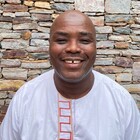
Residents, including Abraham Tetteh, Headteacher of Yirepe Municipal Assembly Basic School, recall the hardships.
"When I was in school, we had nowhere to fetch clean water. The only source was shared with animals, and if you didn't go early, you wouldn't get any, especially during the dry season. The water was unsafe, leading to numerous illnesses, including skin diseases and even deaths."
The lack of access to clean water led to widespread health issues. Skin conditions were common, causing itching and other reactions, while waterborne diseases such as diarrhoea and dysentery were prevalent. The impact on education was also severe, as pupils frequently missed school to seek medical care or fetch water from distant sources, affecting both attendance and academic performance.
The 'WASH Services in Skin-NTDs Endemic Areas' project, which implemented aspects of the ANESVAD Foundation-funded WASH-NTDs masterplan, provided a borehole with a handpump to address some of these challenges, including reducing the incidence of skin-NTDs prevalent in the community. The intervention has been very helpful, as Abraham Tetteh attests,
"We prayed for clean water, and our prayers were answered. A project, possibly from IRC, provided us with a borehole. This water has truly saved Yirepa. It's close to the school and benefits the pupils, teachers, and the entire community."
The availability of clean, safe water has drastically reduced dependence on the contaminated stream. There has been a decline in skin-related diseases and waterborne illnesses, leading to improved overall health. The borehole's proximity to the school has also enhanced educational outcomes, as pupils no longer need to travel long distances for water, allowing them to concentrate on their studies. Both teachers and pupils have benefited from improved attendance and performance.
This initiative, a collaborative effort involving the Municipal Assembly, the Municipal Health Department, and IRC Ghana, has also fostered a strong sense of community ownership. Residents contribute annually to a fund, held in a bank account, to cover future maintenance costs, ensuring the sustainability of the water facility. Regular health education and awareness campaigns by health personnel have further improved hygiene and health practices. Headteacher Tetteh adds,
"Health personnel regularly educate us on how to maintain our health, which has been very helpful."
Indeed, the flow of clean water in Yirepe has led to reduction in skin diseases and other illnesses. The challenge now lies in maintaining the facility to ensure continued access to clean water for future generations. The community's efforts to save for maintenance should be encouraged, as they work to leave past hardships behind and build a healthier, more prosperous future for all.
For the full testimony of Abraham Tetteh, Headteacher of Yirepe MA Basic School, see the video below: