Sustainable services in climate hotspots: Shiuli's story
Published on: 01/01/2025
We've been the knowledge and innovation partner for the BRAC WASH Programme since 2008.
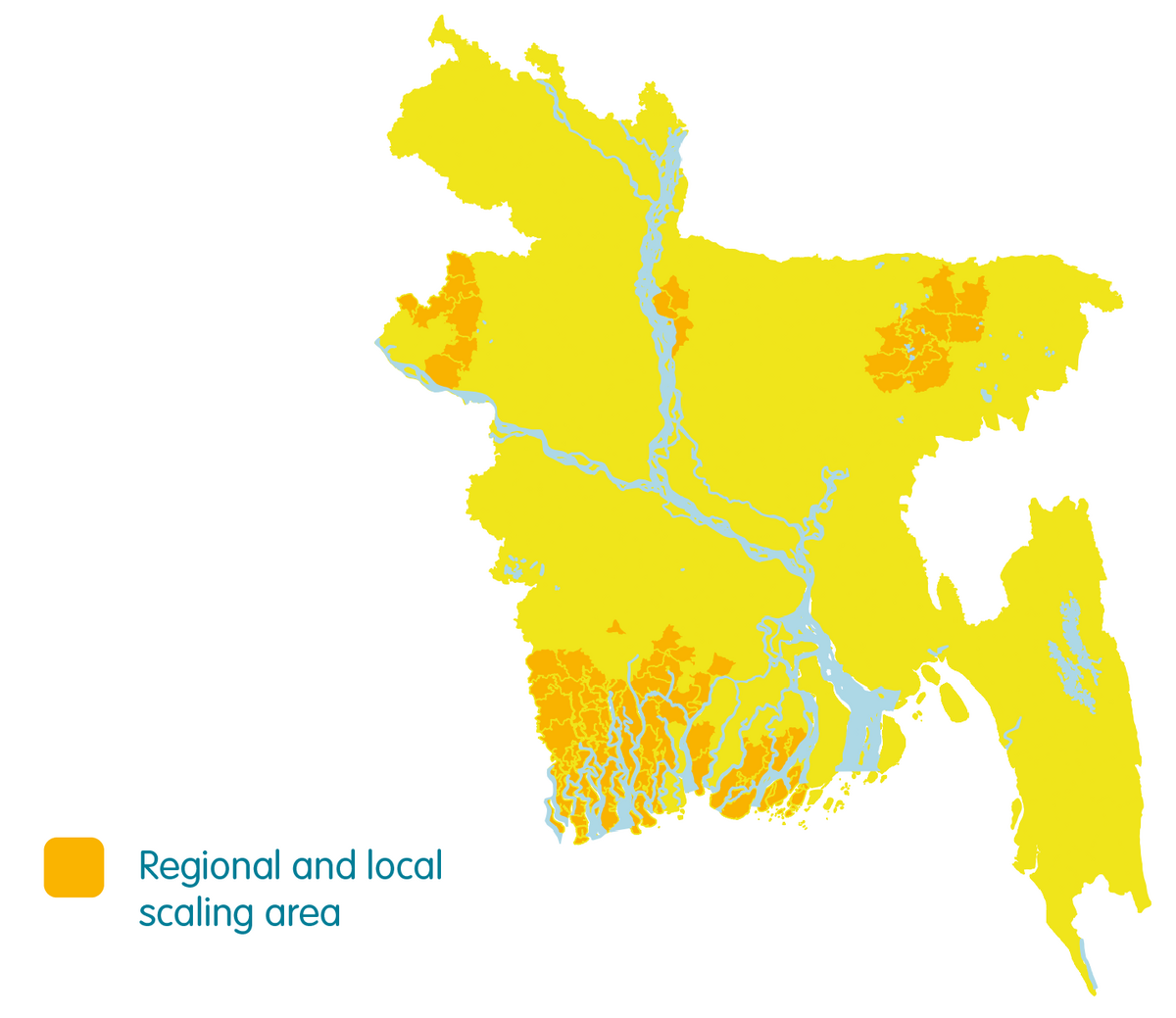
Currently, work is focused around a plan to reach 1 million people with safely managed water and sanitation services - the Equitable and Sustainable WASH Services in Bangladesh Delta Plan Hotspots (2022-2026) funded by the Embassy of the Kingdom of the Netherlands. The project is working in four delta plan hotspots (coastal areas, drought-prone areas, floodplains and low-lying river basin areas) across 14 districts of Bangladesh. It is taking three main approaches: 1. Developing a microcredit model to help people afford safe water and sanitation services that can handle extreme weather 2. Strengthening supply chains and supporting local entrepreneurs to operate and maintain services 3. Working with local governments to make sure subsidies reach those who need them most.
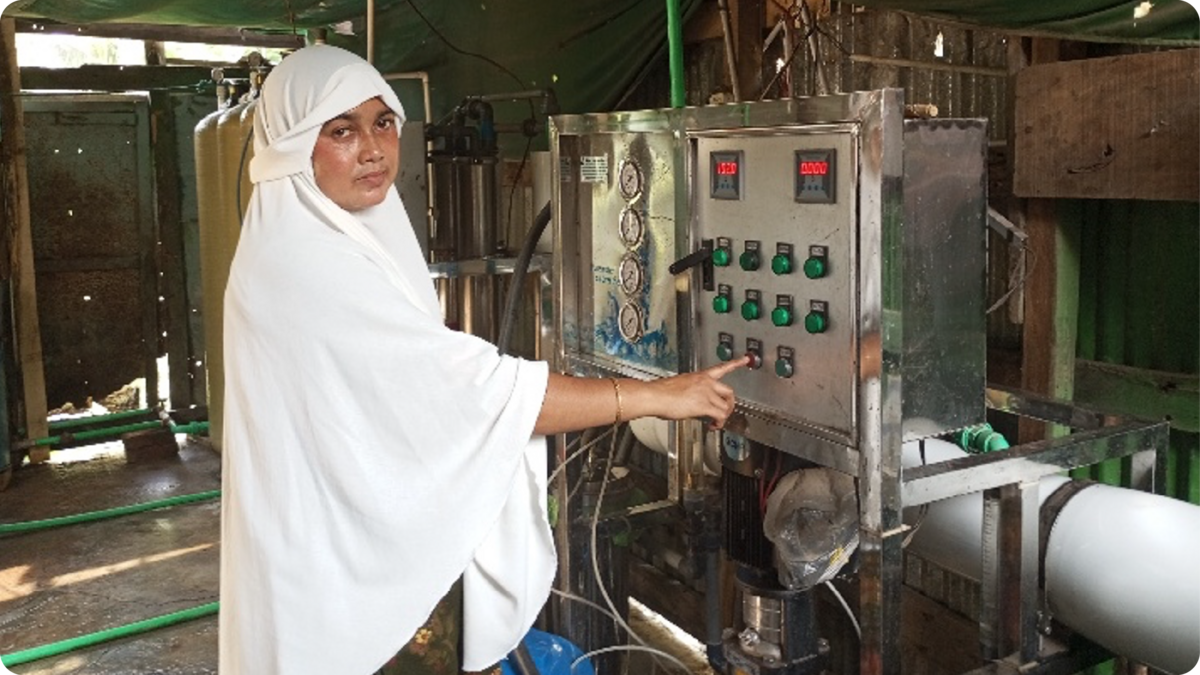
One of the most inspiring stories to emerge is that of Shiuli Begum, a mother in her 40s and now an entrepreneur. Shiuli lives in Patharghata, a coastal sub-district in Barguna district, Bangladesh, which is home to 150,000 people.
For much of her life, Shiuli had to make impossible choices just to keep her family healthy. "We used to drink water from the pond," she says. "It wasn't salty like the river, but it was never clean. In the rainy season, we would collect rainwater and store it in plastic drums – but it never lasted long enough."
Determined to find a solution, Shiuli and her husband sought help from BRAC. The local project officer told her how people in other sub-districts had set up their own water treatment plants, with the help of the IRC-BRAC partnership, and Shiuli agreed to do the same.
It was a big step. The plant would be the first of its kind in the sub-district. But with a loan and technical advice, and training, Shiuli was able build her business – and a future for her family.
BRAC provided financial support (microcredit), connected her with an engineering firm, and helped her promote the service in the sub-district. The project also helped with water quality testing. Initially, Shiuli provided water to her community for free. Gradually, people started buying it, and local offices became corporate clients. In 2024, with further loans and technical assistance, she tripled her capacity with a second unit.
Now, local entrepreneurs collect water from Shiuli and distribute it in jars to neighbouring villages. Fishermen stock up before heading to sea. Shiuli's next big ideas are to add solar power, and piped connections to nearby homes. Clean water has become a part of daily life in Patharghata.
Although there is not yet sufficient expertise on climate-resilient water, sanitation and hygiene services in Bangladesh, we're strengthening the ability of communities and institutions to plan, provide, and regulate water, sanitation, and hygiene services and encouraging political ownership in climate-vulnerable regions of Bangladesh.
Other highlights of 2024
Another important initiative, which concluded this year, has resulted in stronger national and local WASH systems, improved collaboration among partners, and better access to services for marginalised communities. The five-year WASH SDG programme focused on sustainable, inclusive, and climate-resilient services, especially in urban slums and remote areas in Bangladesh, Ethiopia, Indonesia, Nepal, Tanzania, Uganda and Zambia. We supported government staff and partners with proven tools and approaches to build lasting capacity and we've documented insights and lessons to inform future work.
As this programme concluded, another began: the WASH Systems for Health Project. So far, we've supported the baseline assessment and helped set the direction for the initiative.
Find out more about our work in Bangladesh
 Bangladesh at a glance
Percentage of the country population with at least basic services (JMP)*
98% water | 59% sanitation | 62% hygiene
The context of our work
Featured publications and outputs from 2024
Burkina Faso | Ethiopia | Ghana | India | Mali | Niger | Rwanda | Uganda
At IRC we have strong opinions and we value honest and frank discussion, so you won't be surprised to hear that not all the opinions on this site represent our official policy.
"We used to drink water from the pond. It wasn't salty like the river, but it was never clean. In the rainy season, we would collect rainwater and store it in plastic drums – but it never lasted long enough."
- Shiuli Begum
Water Entrepreneur
Patharghata, Bangladesh