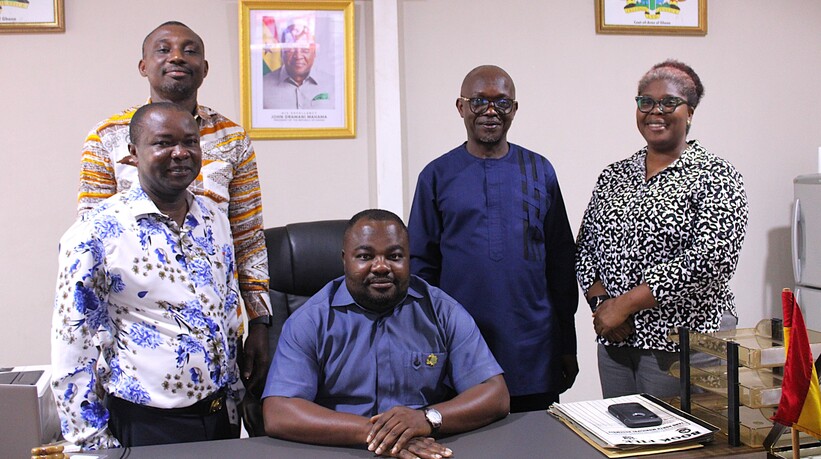
IRC Ghana Team with Tano North Municipal Assembly Officials
Published on: 02/07/2025
Vulnerable communities in hard-to-reach areas continue to face significant challenges in accessing safe water and adequate sanitation, which threatens their health and well-being. To address these gaps, IRC Ghana, in partnership with the Tano North Municipal Assembly, launched a WASH System Strengthening Project funded by The Church of Jesus Christ of Latter-day Saints. This initiative aims to expand safe water and sanitation coverage, strengthen local WASH governance, and promote sustainable hygiene practices in hard-to-reach areas.
An inception meeting was held to introduce the project, familiarize district leadership and key stakeholders with its goals, finalize locations for sub-projects, and discuss suitable infrastructure delivery options. The team also visited proposed sites to assess local conditions and ensure that project interventions align with community needs.
During the inception meeting, it was noted that the project is aligned with needs identified in the Tano North Ahonidie Dwumadie (TNAD) WASH master plan and the Tano North Municipal Medium Term Development Plan. The project is to contribute to the vision set in the Tano North Municipal Assembly's WASH master plan: "By 2030, all people in the Tano North Municipality will have access to sustainable, safe water, sanitation, and hygiene services in households, schools, and other institutions."
From the municipal perspective, the partnership with IRC has always been collaborative rather than a one-sided intervention.The Municipal Chief Executive, Mr. Pius Sampson Opoku, reaffirmed the assembly's commitment to the partnership, stating:
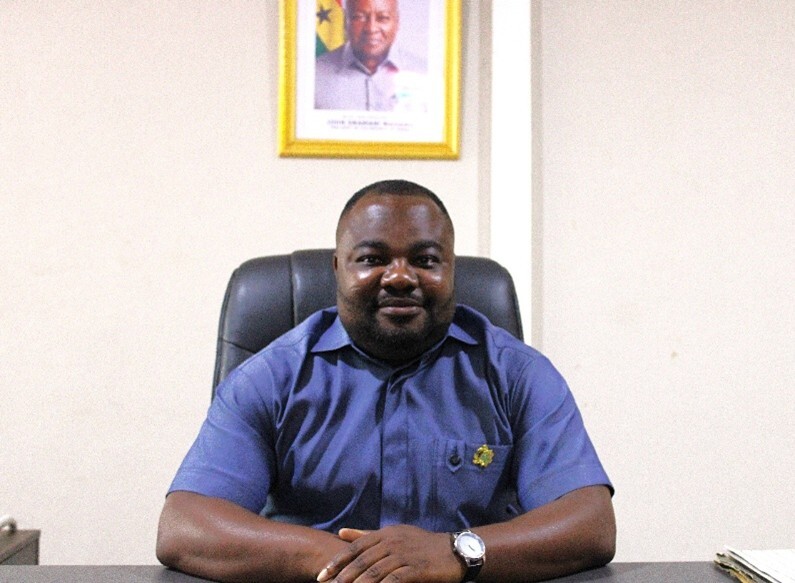
"The Municipal Assembly will invest in this initiative through periodic maintenance and regular monitoring of the project sites, ensuring sustainability"
Echoing this commitment, Mr. Eric Adomako, Municipal Coordinating Director, explained that sustainability is central to the project's design:
"During the inception phase, communities will be educated on proper facility management. Maintenance will be prioritized to prevent infrastructure failures, with plans in place to introduce cost-recovery mechanisms through Water and Sanitation Management Teams (WSMTs)."
He added that "integrating WASH into the municipality's long-term development agenda reduces our burden while empowering communities. With support from IRC and the Church of Jesus Christ of Latter-day Saints, we're ensuring no one is left behind."
Looking ahead, both IRC Ghana and the Tano North Municipal Assembly (TNMA) agreed on a collaborative framework to guide project implementation. TNMA will lead the procurement and supervision of contractors for the construction of WASH facilities in schools, health centers, and communities, and ensure timely delivery.
Both IRC and TNMA also agreed to hold between three and five coordination meetings throughout the project, with monitoring conducted at two levels: TNMA overseeing physical works and IRC providing overall project management and service monitoring in collaboration with the RCC. Additionally, both parties will jointly plan and deliver training sessions for Assembly staff, health facilities, schools, and Water and Sanitation Management Teams (WSMTs) to strengthen local capacity and ensure sustainability.
This project demonstrates how collaborative partnerships and system-based approaches can transform lives through sustainable WASH solutions. With the funding from The Church of Jesus Christ of Latter-day Saints and support from IRC Ghana and the Tano North Municipal Assembly, 2,381 people are expected to gain access to improved water and sanitation services, a vital step toward ensuring that every family enjoys the right to safe water, sanitation, and hygiene.