


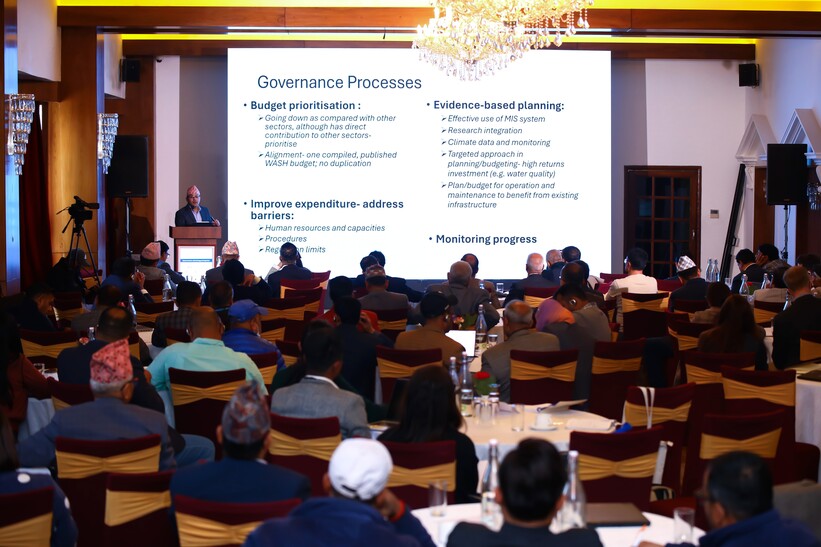
Two new case studies from the WASH Systems for Health programme shed fresh light on how government leadership—both political and technocratic—shapes the trajectory of WASH systems strengthening.
Published on: 19/03/2026
This blog was written by Paul Hutchings of Leeds University
The first case study explores how Nepal’s National WASH Management Information System (NWASH‑MIS) has been developed and institutionalised through strong federal vision, coordinated action across all three tiers of government, and an evolving ecosystem of policy, financing and data systems. The second examines sanitation leadership in Kaduna State, Nigeria, under the Clean Nigeria Campaign, illustrating how political signalling, state‑level coordination and community‑embedded structures have helped accelerate progress towards open‑defecation‑free status across multiple Local Government Areas. Together, these reports offer grounded, practical insights into what authentic government leadership looks like in two very different contexts.
These studies arrive at an important moment for the WASH Systems for Health research and learning programme. When the programme began in 2024, our work was organised around four core themes: integrating gender, equity and social inclusion; building climate‑resilient WASH systems; enabling transitions from basic to safely managed services; and strengthening the measurement of WASH systems change. These remain fundamental, yet as we have engaged with governments, development partners and local institutions, it has become increasingly clear that systems strengthening cannot be achieved without a deliberate emphasis on political commitment, leadership capabilities and the political economy of reform. This recognition has shaped new strands of the programme, including a dedicated focus on political economy analysis and the decision to make political commitment a central theme of the WASH Systems for Health Learning Forum in Nepal in 2025.
The Nepal and Kaduna case studies reinforce the reinforce this central conclusion emerging across the WS4H portfolio: government leadership is not simply a helpful condition for WASH systems strengthening—it is the central organising force that determines whether change takes root and lasts. Leadership that brings together political commitment, technocratic capability, and inclusive coalitions is what enables systems to evolve and deliver for communities over time.
The case study reports form part of a wider study on effective government leadership competencies for WASH systems strengthening, led by Aguaconsult and funded by the Osprey Foundation and the Waterloo Foundation. More outputs will follow in the coming months, including practical tools and further evidence on how leadership can be supported, enabled and sustained. As we continue to learn from governments driving WASH systems change around the world, one message is clear: where government leadership is strong, systems strengthen; where that commitment sustains, services last.
At IRC we have strong opinions and we value honest and frank discussion, so you won't be surprised to hear that not all the opinions on this site represent our official policy.