Supporting governments in sub-Saharan Africa and South Asia to strengthen the systems needed to establish reliable, resilient and inclusive WASH services and end the preventable deaths of mothers, young children and infants
Published on: 03/08/2023
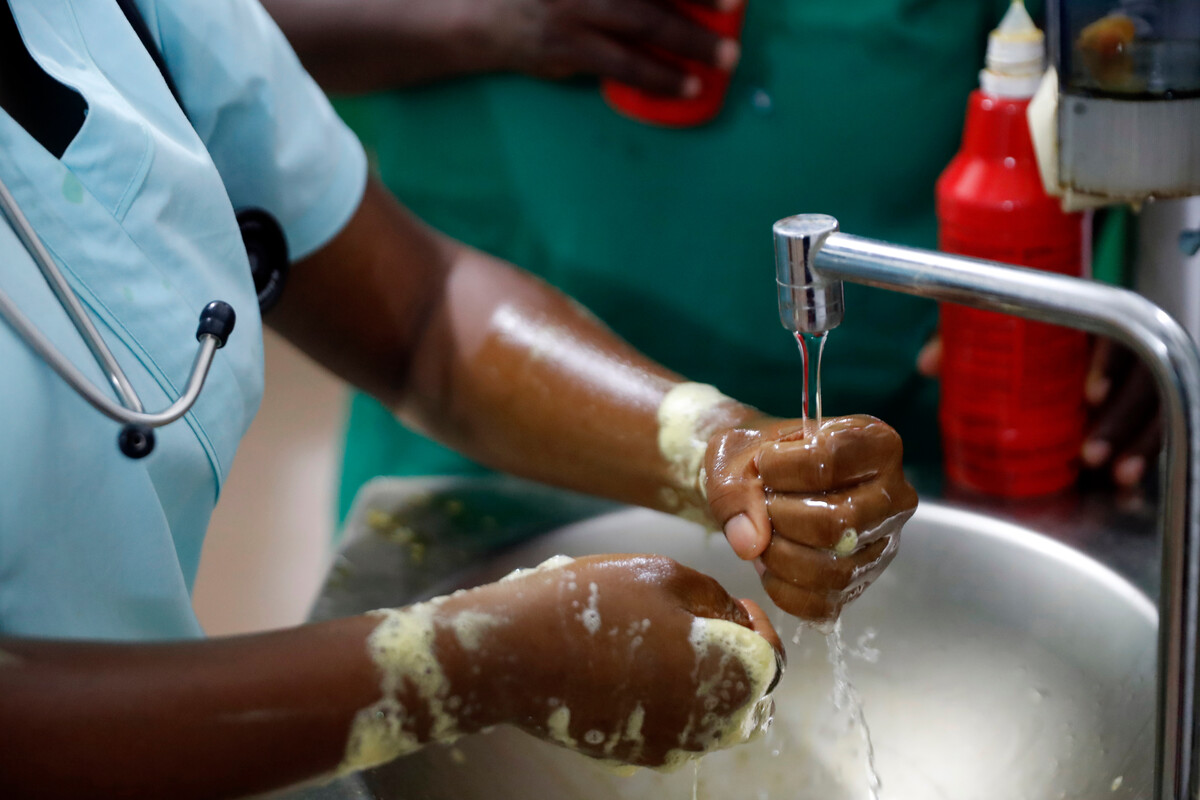
WASH Systems for Health supports governments in up to six countries in sub-Saharan Africa and South Asia to strengthen the systems needed to establish reliable, resilient and inclusive WASH services over five years. The programme contributes to better health, nutrition and education, especially for poorer households and communities, and for women and girls in particular, with the aim to end the preventable deaths of mothers, young children and infants (EPD). The programme's focus on systems aims to enhance the sustainability of WASH services; ensures that women are empowered to take informed decisions about the services they receive; and attracts new public and private finance to accelerate progress towards SDG 6 WASH targets – including universal access to safely managed WASH services.
Up to six priority countries were selected from a group of sixteen. This included eleven designated flagships that form the core of the the Foreign Commonwealth and Development Office's (FCDO) approach to ending the preventable deaths (EPD) of mothers, young children and infants and five countries where investment in WASH systems are complementing existing programmes. Intervention countries underwent a comprehensive needs assessments and were prioritised considering the national context – taking into account political demand, willingness and ability to drive a process of reform and complementarity to existing WASH and other programmes. This selection process was critical to ensure maximum impact and value for money and lasted up to 12 months (Phase I). Implementation is now taking place over the following four years (Phase II), ensuring there is sufficient time to embed change. The programme's influence extends well beyond six priority countries. It is designed to help the WASH sector shift from infrastructure delivery with limited reliability to reinforcing the core systems needed to establish inclusive, sustainable and resilient services.
Alongside implementation of the programme, a research and learning agenda on WASH systems strengthening has been established to ensure lessons learnt are captured and widely communicated from the programme to the global WASH sector. There is also a Global WASH Systems Support Hub available which responds to demand from ODA-eligible governments for advice and support on WASH systems strengthening.
IRC leads a consortium of partners, made up of the London School of Hygiene and Tropical Medicine (LSHTM) and University of Leeds, to establish the WASH Systems For Health Facility, which manages and coordinates the strategic delivery of the programme. The Facility conducts initial assessments in 16 countries, with follow-up assessments in six countries following a prioritisation exercise during Phase I; develops a results framework (progress of WASH systems strengthening efforts will be monitored and evaluated throughout Phase II as part of monitoring, evaluation and learning or MEL); establishes a research and learning agenda for WASH systems strengthening; and provides a Global WASH Systems Support Hub. The hub is operational throughout Phase II, enables governments in ODA-eligible countries to receive tailored advice and support on WASH systems strengthening.
Based on established mechanisms, the WASH Systems Hub offers two types of service – a help desk, to respond rapidly to specific requests for information and advice, and a call-down service for more substantial pieces of work typically requiring a site visit or face-to-face meetings. Work can be allocated to appropriate in-house experts, supplemented by external consultants (which can be national or international, depending on the requirement) and can be commissioned from any ODA-eligible government or FCDO post.
Supporting documentation: Read the WASH Systems for Health: Business Case, FCDO, 23 Jan 2023
Official project pages: FCDO Development Tracker | UN SDG Actions Platform
This new and additional action will help strengthen the core systems used by governments to establish and sustain WASH services; services which are inclusive, sustainable and resilient to the impacts of climate change - benefiting people's health, wellbeing and future resilience. Beyond supporting SDG 6 targets 6.1, 6.2 and 6.3, the action will also contribute to universal health coverage, with a focus on prevention that extends to improving access to WASH in health care facilities and schools, and quality education received in particular by girls. The principal impact of the programme is to improve health and help end the preventable deaths '(EPD) of mothers, young children and infants.
Accountable: Foreign, Commonwealth and Development Office (FCDO)
Funding: Foreign, Commonwealth and Development Office (FCDO)
Partners - Phase 1 (Feb 2023 - Mar 2024) - WASH Systems Facility design and implementation
Partners - Phase 2 (Apr 2024 - 2026): Strengthening WASH systems – governance, institutions and actions
IRC and the London School of Hygiene and Tropical Medicine published a Learning Brief to support health-sector decision-makers, practitioners and WASH actors with a structured approach to address WASH in healthcare facilities. Read more...
University of Leeds and IRC introduce a breakthrough framework to achieve water and sanitation targets Read more...
Mobilising political support Read more...
Celebrating World Day of Social Justice by highlighting the centrality of social inclusion in systems strengthening. Read more...
WASH Systems Strengthening Help Desk and Call-Down Service Read more...
Two new case studies from the WASH Systems for Health programme shed fresh light on how government leadership—both political and technocratic—shapes the trajectory of WASH systems strengthening. Read more...
A summary of the discussions and lessons from the 2025 Nigeria Learning Forum Read more...
More evidence is needed for supporting sustained efforts to strengthen inclusive WASH systems Read more...
This learning brief demonstrates that sustainable WASH in healthcare facilities is fundamentally a systems challenge, not only an infrastructure... Read more...
This report identifies a set of transition pathways reflecting how systems evolve from basic access to meeting safely managed criteria. These... Read more...
This Nigeria case-study report takes a broad view of leadership, encompassing political and technocratic leadership and extending far beyond the... Read more...
This report focuses on Nepal's government leadership related to the development and implementation of NWASH-MIS. Read more...
This report provides a political economy analysis of how governance dynamics shape the delivery of water, sanitation and hygiene services in... Read more...
Political Economy Analysis (PEA) is a structured method to guide the development of evidence-based political engagement strategies to support systems... Read more...
Defining what are the priority research questions to advance water, sanitation and hygiene systems strengthening and where to focus future sector... Read more...
The first WASH Systems for Health Learning Forum was held 10–14th February 2025, bringing together the entire programme consortium and facilitating... Read more...
This paper aims to inspire thought, action, and investment in strengthening WASH systems, ensuring that the rights of marginalised and excluded... Read more...
This is the Research and Learning (R&L) Agenda for the FCDO WASH Systems for Health programme Read more...
Recording of the hybrid session around establishing approaches for strengthening WASH systems in six countries as part of the WASH Systems for Health... Read more...
An introduction to definitions and frameworks, monitoring and evaluation, and a research and learning agenda for WASH systems strengthening. Read more...


