Mobilising political support
Published on: 19/03/2025
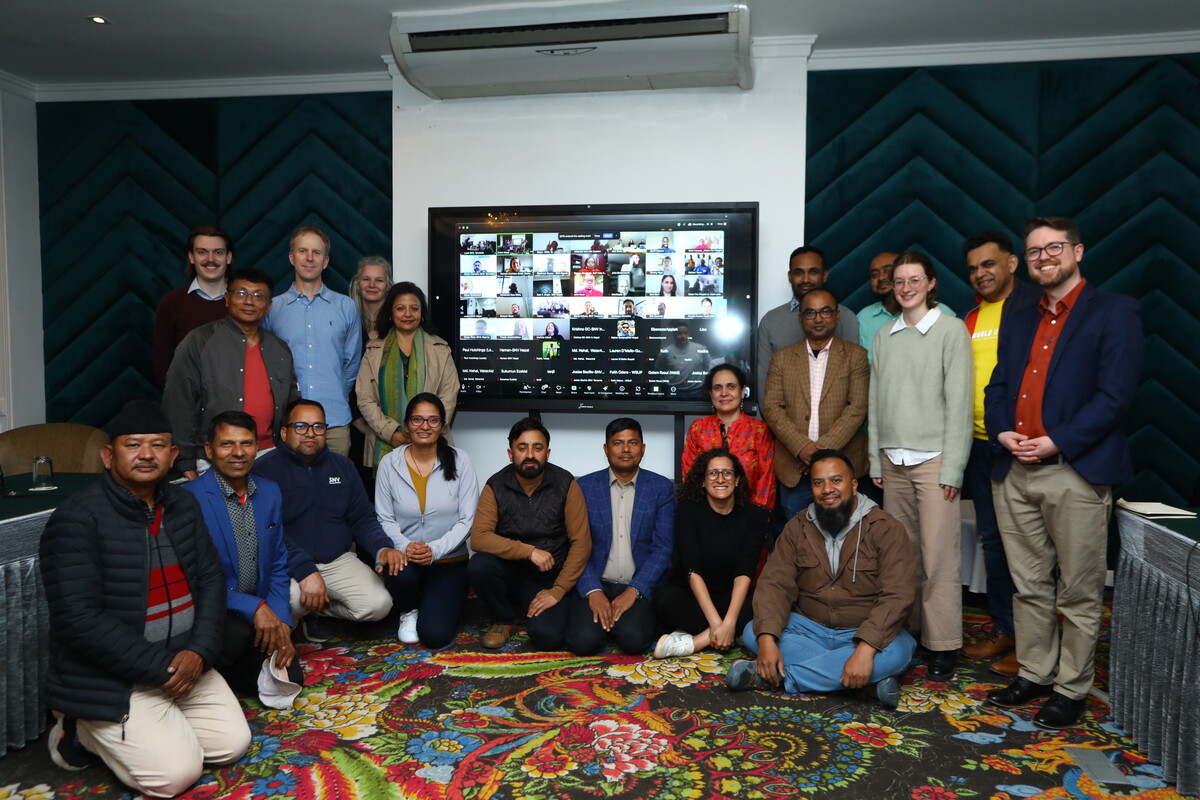
The WASH Systems for Health programme (WS4H), funded by FCDO, is a four-year initiative (2023-2028) aimed at strengthening WASH systems in Nepal, Bangladesh, Malawi, Nigeria, Sierra Leone and Tanzania. It is implemented by a consortium of partners: IRC, the London School of Hygiene and Tropical Medicine (LSHTM) and University of Leeds.
The programme focuses on social inclusion, climate resilience, and system-wide capacity building to increase access to sustainable WASH services. A key feature is the annual Learning Forum, which promotes cross-country knowledge exchange and collaboration.
The 2025 Learning Forum held online and in Kathmandu, Nepal, emphasized building political support for WASH systems strengthening. The forum had two components: a Nepal-focused component on leveraging political advocacy for progress on inclusive, resilient, and safely managed WASH services (February 10-11) and a hybrid event to build political support for WASH systems across multiple countries (February 12-13).
The Learning Forum concluded with the following key lessons on building political support for WASH systems strengthening:
We talked with Nadira Khawaja, WS4H Project Leader from the Nepal country programme implemented by SNV and WaterAid about the event, highlights and future directions. The following paragraphs summarise her reflections.
The power of co-creation
The political advocacy focused event in Nepal was closely coordinated by WASH Systems for Health partners and the Ministry of Water Supply in Nepal. Nepali partners had the freedom to determine the structure and topic of the event, which made it possible to involve the Ministry and key local partners from the start.
Having government leadership as a central driving force made it possible to align with previous national events, such as a climate-risk informed WASH bottleneck analysis supported by UNICEF, followed by a National WASH Joint Sector Review led by the Ministry in 2023 and a UN and WaterAid hosted global summit on safely managed sanitation in Kathmandu in 2024. A key recommendation from these events was to organise a political dialogue on water, sanitation and hygiene in Nepal. Since the programme’s learning forum was focused on political advocacy, this was seen as the perfect opportunity to make the political dialogue happen.
“This was political advocacy for mobilising resources and commitments to the WASH sector. Because at the key decision-making level, that’s what the political system has to do, not the executive.”
Stepping into conflict as a key to resolution
The political dialogue brought the three tiers – federal, provincial and local government – together on one stage. Before federalism was instituted in Nepal, the reporting structure involved local entities reporting to regional authorities, who then reported to the central authority. Under the new Constitution (2015), the country has three autonomous tiers of government which have distinct responsibilities and are supposed to collaborate according to the Constitution, but coordination remains weak. During the debate, representatives from different tiers tried to shift the blame onto each other, but the moderator effectively redirected the discussion towards future commitments and collaboration. The debate resulted in a consensus on the need for each party to activate their WASH units, noting that currently, only in one case it is working well. A subsequent strategy workshop with sector partners also clarified the important role of sector stakeholders in helping parties implement that change.
Towards a Presidential compact for Nepal
At the event, the Minister pledged to table the agenda of safely managed WASH in the cabinet, which had been neglected for a long time, and write an appeal letter to the heads of all political parties to prioritise WASH during the ongoing budgeting process. He also committed to increasing funding for unfinished water supply projects in the south of Nepal, which have been incomplete for 7-8 years. The Minister's clear feedback and the involvement of Sanitation and Water for All (SWA) on the second day, facilitated by IRC, provided an ideal scene-setting for positioning Nepal towards its own Presidential compact. Nepal has been discussing a WASH compact for a while, but has made no progress because it is not being addressed at the highest political decision-making level. The Minister's commitment will support the process, and the Joint Secretary expressed optimism about moving it forward.
“There were about additional 10 or 13 ministries and agencies invited, so everybody got to know what's happening. So it means hopefully that that understanding and push from all sides for the compact is now there.”
This event could be a milestone in realising the Presidential compact for Nepal, with the involvement of various stakeholders, including UNICEF and other ministries and agencies.
Political engagement as a red thread
In the second half of the training, participants from Nepal, Bangladesh, Nigeria, Sierra Leone, Malawi, Tanzania, as well as partners from Europe and the United States, joined either in the room or online. These sessions were learning oriented, introducing the political economy approach (PEA), and linking the red thread of political engagement to various thematic areas, from climate to social inclusion. Nadira particularly appreciated the session with all the countries sharing and discussing political advocacy and the overview of ongoing efforts.
Balancing public health and environmental concerns
“You don’t stop working on sanitation just because they're producing greenhouse gas. So for me, that was a good reminder and affirmation.”
Nadira found the climate session valuable, particularly the discussion on mitigation versus adaptation. She appreciated the conclusion that public health work should not be compromised due to greenhouse gas emissions from septic tanks. The session provided a good reminder and affirmation of the importance of balancing public health and environmental concerns.
Social inclusion as an integral part of WASH systems strengthening
The WASH Systems for Health Partnership recently published a learning note titled Towards Gender Equity and Social Inclusion (GESI) responsive WASH Systems Strengthening [Tv5] . The note introduces a framework that integrates gender and social inclusion with the WASH system building blocks. The session asked participants to reflect on who is still marginalised in their respective countries, yielding thought-provoking results, like the Lhotshampa population (Bhutanese people of Nepalese descent) and climate migrants in Nepal.
Nadira’s next steps include supporting the Ministry in drafting a strategy paper based on the outcomes of the forum and share it with sector stakeholders.
This strategy paper will pave the way for continued action and possibly support the process for a Presidential WASH compact for Nepal in the near future.