This blog distils the journeys of UDUMA and Sanergy, why they pursued carbon credits, how they financed the first mile and what the timeline looks like.
Published on: 01/12/2025
The One for All alliance Finance Connect invited two private operators for this month’s meeting: one in rural West Africa and one in urban Kenya, who are turning service upgrades into verified emission reductions. We discussed with them what it really costs, and where the risks (and rewards) lie.
For water and sanitation providers working in tough geographies, carbon credits promise financial returns, but the journey can look foggy: complex standards to comply with, lengthy business model development processes, volatile prices in the carbon market, and overall uncertainty on the returns on investment.
This month, we heard two grounded, deep-dives from practitioners who are “doing the thing”:
This blog distils their journeys, why they pursued carbon credits, how they financed the first mile and what the timeline looks like. If you’re considering carbon finance for water or sanitation, here’s an honest, field-tested account.
UDUMA runs area-based portfolios—handpumps, solar stations, and piped systems—serving rural areas: so, the profitable side of the business helps carry the unprofitable side. But with tariffs fixed in government contracts, any effort to raise service levels (e.g. by improving water quality through chlorination) needs a new revenue stream. Carbon credits looked like a good fit for results-based finance: if chlorination reliably prevents households from boiling water, those avoided emissions could be monetized.
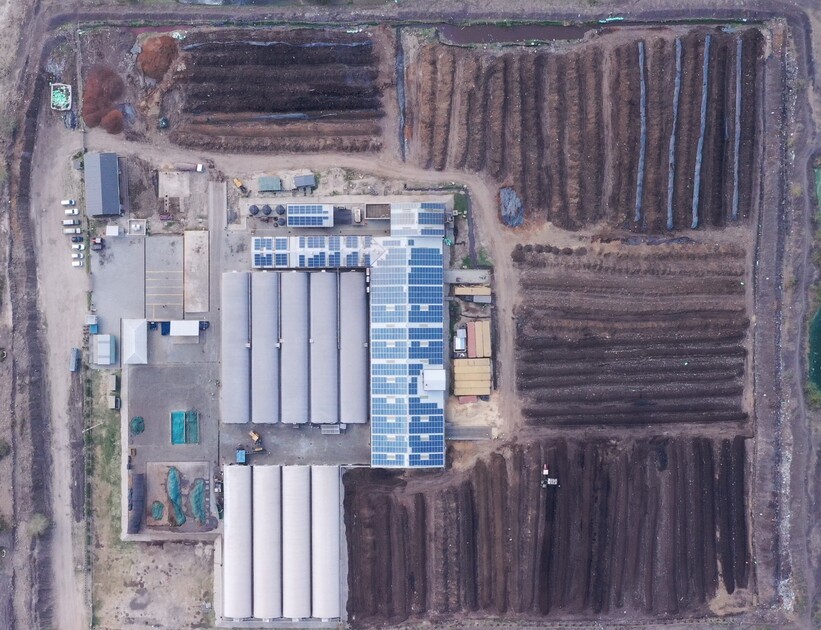
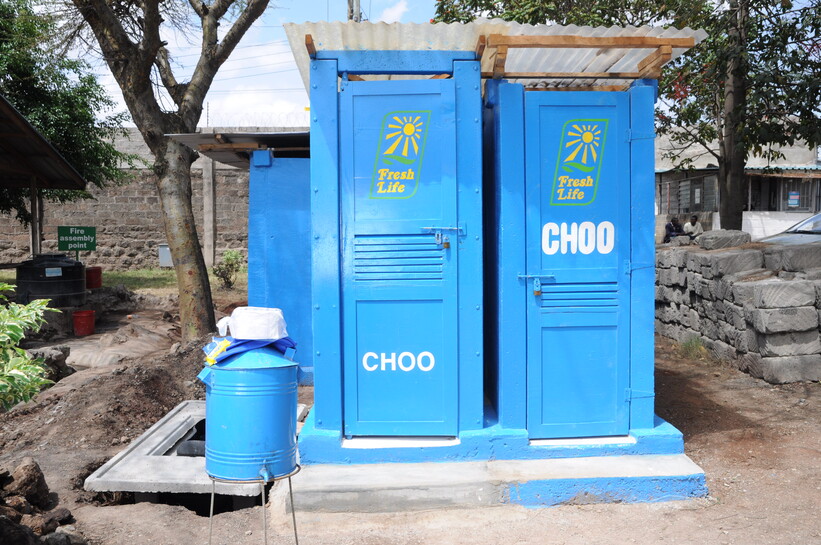
Sanergy operates container-based sanitation (Fresh Life), transport, treatment, and reuse of waste (Regen Organics). The emission story is clear: divert organic waste from anaerobic treatment baselines (pits, landfills) into aerobic treatment (composting) to avoid methane. That avoidance is quantifiable and saleable.
In 2022, UDUMA’s feasibility study in Burkina Faso showed that the potential volume of chlorinated water could generate meaningful credits. In January 2025, a catalytic GiveWell grant funded a 15-month pilot in five rural villages in Mali, across 10 systems. The grant was helpful for the learning curve: understanding operational feasibility, the true cost of chlorination in remote and insecure contexts, and the required setup of carbon monitoring, reporting and verification (MRV). In March 2026, there will be a decision point for scaling chlorination in Mali and Burkina Faso, based on the pilot results.
Carbon projects are long and front-loaded. You’ll typically wait a minimum of 18 months before revenue flows, therefore a grant covering CapEx and initial MRV costs made UDUMA’s project investable. Without grants, the modelled 10-year returns would stay negative. With a grant covering ~44% of the total project CapEx costs and credits valued at US$10 per ton, the project could yield a slim but positive 5% return, which is tight but viable if well managed.
Sanergy finalised an internal feasibility study in 2022,and project development began soon after. In early 2023. the validation/verification cycles kicked off with an accreditation body. At the end of 2024, the project was approved and the first credits were issued in parallel. Running validation and verification in parallel shortened the whole process.
Sanergy issued ~6,600 credits in the first 6 months of their carbon project and 27,800 credits in the following two years. The target is to reach ~30,000 a year by 2027 as waste processing expands. They modelled conservative prices (US$10/ton) but retained credits in inventory to pursue higher-value buyers who pay a premium for strong co-benefits (container-based solutions in informal settlements, smallholder farmer impacts from using organic fertiliser).
Cost reality check for Sanergy:
For UDUMA, which is still early in the process, remote water systems are in places with lower monitoring capacity, while the rural scale is less attractive to suppliers, impacting chlorination equipment, chlorine quality and after sales services. Training is indispensable but building true autonomy in field staff takes time and carbon standards require consistent, documented performance.
For Sanergy, proving methane avoidance was challenging; pits vs. landfills, climate conditions (temperature, rainfall), and waste types change the credit yield per tonne. Furthermore, as volumes grow, buyers may expect volume discounts driving down the price. The fixed annual cost (~US$25k) becomes more manageable at scale—but the average price per ton may drift down.
Carbon credit revenue shares, flat per-credit fees, community benefits and other rules vary by country and project type. Kenya, for example, has clearer frameworks than many neighbours. The net impact of carbon credits depends on whether policy unlocks better markets (e.g., compliance-eligible credits sell at higher prices) or just takes a slice of the same pie.
Also, changes in the methodologies used to assess carbon credits (e.g., Gold Standard updates) can shift the assumptions underpinning the financial projections. While voluntary market prices can drift, compliance markets (e.g., for airlines or country trades) may offer stability—but with tougher hoops to go through in order to access them.
The group pressed on “Whose credits are these?” and how do communities benefit?
UDUMA’s assumption is that credits would flow to the operator and would be reinvested to raise service levels and expand coverage across their area-based portfolios—effectively a results-based subsidy.
Sanergy’s position is that after covering carbon programme costs, revenues are allocated across entities based on who does what work in the service chain—ultimately supporting affordable sanitation - priced below actual cost and in line with the ability to pay.
For water and sanitation, ensuring a clear benefits pathway—lower tariffs, higher reliability, or added coverage—is both ethically sound and commercially persuasive to premium buyers.
Following both presentations, participants had an animated Q&A session, summarised briefly below:
The waste type, the baseline, and the climate. With warmer/wetter climates, there are higher methane baselines and therefore higher yields.
□ Can you prove a credible baseline and a measurable, additional carbon dioxide or methane reduction / avoidance?
□ Do projected credits/year comfortably cover fixed monitoring, reporting, and verification costs (with headroom)?
□ Who will buy your carbon credits, why from you, at what price/volume, and on what timeline? Can you tell a co-benefit story that justifies premium pricing?
□ Can you secure grants or concessional funds to carry capital expenditure (CapEx) and operational expenditure (OpEx) for 12–18 months before the first issuance takes place?
□ Have you stress-tested devices, supply chains, staffing, quality assurance and seasonality? Is your data audit-ready?
□ What are country rules now and likely next year on carbon credits? Can you future-proof towards compliance markets?
These are based on the presentations and the insights provided by Éléonore and Haroon. If you can’t tick all these with confidence, pause and think of other revenue streams that can cover your financial risks.
Carbon credits are not free money. They’re earned through operational excellence, rigorous monitoring, reporting and verification, and persistent market-building. UDUMA shows how credits can finance service upgrades in places where tariffs can’t increase. Sanergy shows how aerobic treatment of sewage sludge can turn methane avoidance into reliable revenue. Both underscore one reality: carbon credits won’t carry the entire revenue required to keep services running – but they can be a useful additional income stream.
Top single recommendation to newcomers?
With thanks to Éléonore and Haroon for being candid about numbers, delays, and the real work it takes to pull this off. You can read more about their work here and here.
At IRC we have strong opinions and we value honest and frank discussion, so you won't be surprised to hear that not all the opinions on this site represent our official policy.