Director | IRC's Global Programme
Follow

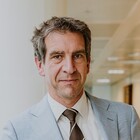
John is Director of IRCs Global Programme and a member of the senior management team. IRC's Global Programme generates and uses evidence - working through partnerships - to drive change at scale in the systems that ultimately deliver water, sanitation and hygiene services at country and local levels.
John is a Briton and European, working from Lodz in Poland where he lives with his family. He has worked for IRC since 2005 and between 2016 and 2019 he was the country director in Ethiopia. He currently represents IRC in the Sanitation and Water for All led Heads of State Initiatives, the executive committee of the Agenda for Change, the Influence team for the One For Alliance, UN-water and the board of the Millennium Water Alliance.
As Ethiopia manages to develop more and more new rural water schemes – springs, wells or boreholes with hand-pumps or engines, piped water – keeping the existing infrastructure running well and safely is a challenge that gets bigger every day. And, despite some encouraging efforts, it's a challenge... Read more...
This paper presents findings on water and sanitation service levels from 16 small and medium towns in four regions of Ethiopia. Read more...
Under severe conditions of water scarcity, it is vital to keep motorised boreholes pumping across Ethiopia's Somali region. Read more...
This publication has been produced by IRC as part of its independent monitoring and knowledge management services to the ONEWASH Plus programme. The... Read more...
Self-supply is the term given to families helping themselves through development of their own water supplies. Usually based on wells dug near the home or fields, such water supplies meet a range of domestic and food production needs. The regional government are launching a new programme to support... Read more...
When something is broken, we might shout for help and then, if we are lucky, get it fixed. Our kids try this and sometimes they get a response. Something similar happens in water supply. Read more...
Can Self-supply help combat Neglected Tropical Diseases (NTDs) in rural Ethiopia? Read more...
Physical works are progressing well in most small towns. Major challenges are water sources in Abomsa, and acquisition of land for sludge drying beds... Read more...
The latest experiences in monitoring for sustainability, and next steps for the wider use of relevant tools within the Consolidated WaSH Account (CWA... Read more...
Partners in the ONEWASH Plus Programme - all working to find new ways to deliver integrated WASH infrastructure and services in small towns - came together to share progress and learn lessons. Read more...
Data was collected on household income, diarrhoeal disease occurrence, water service provision, and sanitation and hygiene services and practices at... Read more...
Early in 2015, we worked with World Vision to develop a baseline for their interventions in Omonada woreda (in Oromia region), Ethiopia, where they are piloting a Self-supply acceleration approach. Read more...
The report provides specific recommendations for woreda-level planning of Self-supply acceleration activities, market and business development, and... Read more...
Recognising the importance of the UK's support to Ethiopia - where DFIDs largest WASH programme is assisting one of the largest African nations to extend water and sanitation services - IRCs specific role in helping to improve monitoring systems is flagged in this new briefing prepared for the UK... Read more...
The Multi-Stakeholder Forum - popularly know as the MSF - is the key annual WaSH sector event in Ethiopia. At the end of 2015, the One WaSH National Program was again in the spotlight. Read more...
Inception phase findings of IRCs work to help strengthen and develop national WASH M&E systems with the National WaSH Coordination Office in... Read more...
Poster presented at the 2015 UNC water and health conference. Read more...
The Coca-Cola Africa Foundation (TCCAF) provided funding under the Replenish Africa Initiative (RAIN) for Millennium Water Alliance Ethiopia Programme (MWA-EP) partners to 'deepen' their water, sanitation and hygiene interventions. The extra support was used to experiment with new interventions to... Read more...