Director | IRC's Global Programme
Follow

John is Director of IRCs Global Programme and a member of the senior management team. IRC's Global Programme generates and uses evidence - working through partnerships - to drive change at scale in the systems that ultimately deliver water, sanitation and hygiene services at country and local levels.
John is a Briton and European, working from Lodz in Poland where he lives with his family. He has worked for IRC since 2005 and between 2016 and 2019 he was the country director in Ethiopia. He currently represents IRC in the Sanitation and Water for All led Heads of State Initiatives, the executive committee of the Agenda for Change, the Influence team for the One For Alliance, UN-water and the board of the Millennium Water Alliance.

WASH system strengthening is climate action and WASH must be a core component of climate financing and adaptation strategies. Read more...
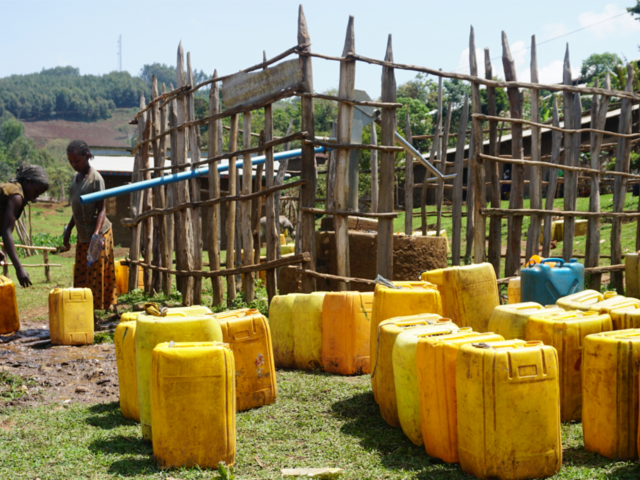
While a high proportion of people In Ethiopian have access to improved water and sanitation services, only a small minority receive services that... Read more...
This paper reviews the experiences gained by the SWITCH consortium (of 33 partners) in grappling with stakeholder engagement in urban water... Read more...
The potential for corruption in water licensing is an important issue. Preventive actions to reduce the risk of corruption are explored. Read more...
Why is self-supply important and what can WASH professionals, governments, academia, funders and implementers do to help self-supply reach its... Read more...
Governments that work for water, water providers on the frontline and people who raise their voices and stand up. Read more...
The same capacities that help us adapt to COVID-19 can be used to face climate change. Read more...
How do Sustainable Land Management programmes relate to interventions promoting groundwater utilisation, and how can the benefits of groundwater... Read more...
An approach is developed to assess WASH risks in marginal populations that are poorly understood and served through conventional approaches. Read more...
This report summarises the strengths of the decentralised local systems that deliver services in two locations in Ethiopia, describing key actors,... Read more...
The government's flagship Climate Resilient Water, Sanitation and Hygiene (CR-WASH) initiative focuses on lowland investments in 'resilient' technologies such as deep boreholes and more resilient piped water infrastructure. These seek to displace emergency humanitarian interventions in drought-... Read more...
This seminar - held at the ILRI campus in Addis Ababa on 25 October 2018 - shared innovative research from the WEEP project on measuring water security in the Ethiopian lowlands. This drew on the study of emotions by the WEEP project team (Cranfield University, Oxfam, IRC WASH, IWMI and the... Read more...
Neither rural sustainability checks, nor urban benchmarking frameworks, are entirely suitable for monitoring small town water services. Read more...
Climate resilient WASH is about new ways of working across the traditional humanitarian and development sectors. We went to one of the harshest spots in Ethiopia, and surely in the world, to find out more. Read more...
This paper presents findings on water and sanitation service levels from 16 small and medium towns in four regions of Ethiopia. Read more...
Under severe conditions of water scarcity, it is vital to keep motorised boreholes pumping across Ethiopia's Somali region. Read more...
Self-supply is the term given to families helping themselves through development of their own water supplies. Usually based on wells dug near the home or fields, such water supplies meet a range of domestic and food production needs. The regional government are launching a new programme to support... Read more...