Director | IRC's Global Programme
Follow

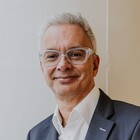
John is Director of IRCs Global Programme and a member of the senior management team. IRC's Global Programme generates and uses evidence - working through partnerships - to drive change at scale in the systems that ultimately deliver water, sanitation and hygiene services at country and local levels.
John is a Briton and European, working from Lodz in Poland where he lives with his family. He has worked for IRC since 2005 and between 2016 and 2019 he was the country director in Ethiopia. He currently represents IRC in the Sanitation and Water for All led Heads of State Initiatives, the executive committee of the Agenda for Change, the Influence team for the One For Alliance, UN-water and the board of the Millennium Water Alliance.
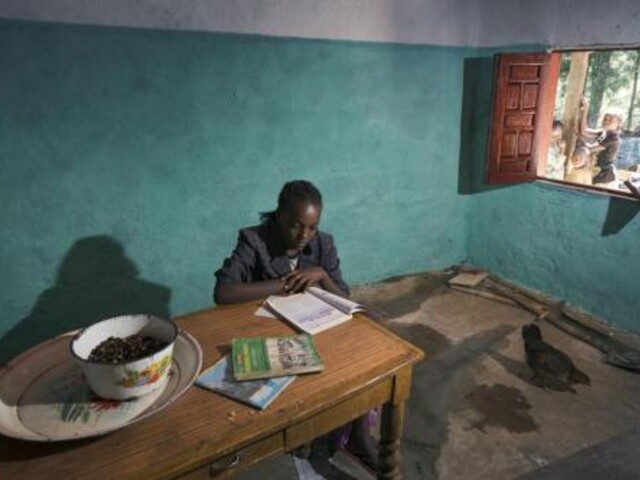
Photographs showcasing that Self-supply can change people's lives. Read more...
Building new partnerships and setting clear goals to leverage investment. Read more...
A new guideline seeks to professionalise the management of multi-village water supplies in Ethiopia Read more...
A team representing government and NGOs from Ethiopia joined a visit to Ghana to learn about planning for achieving the Sustainable Development Goals for WASH. Read more...
With water quality at source and point of use a major concern, there is renewed interest in Household Water Treatment and Safe Storage (HWTSS). Read more...
Climate resilient WASH is about new ways of working across the traditional humanitarian and development sectors. We went to one of the harshest spots in Ethiopia, and surely in the world, to find out more. Read more...
As Ethiopia manages to develop more and more new rural water schemes – springs, wells or boreholes with hand-pumps or engines, piped water – keeping the existing infrastructure running well and safely is a challenge that gets bigger every day. And, despite some encouraging efforts, it's a challenge... Read more...
Under severe conditions of water scarcity, it is vital to keep motorised boreholes pumping across Ethiopia's Somali region. Read more...
Self-supply is the term given to families helping themselves through development of their own water supplies. Usually based on wells dug near the home or fields, such water supplies meet a range of domestic and food production needs. The regional government are launching a new programme to support... Read more...
When something is broken, we might shout for help and then, if we are lucky, get it fixed. Our kids try this and sometimes they get a response. Something similar happens in water supply. Read more...
Can Self-supply help combat Neglected Tropical Diseases (NTDs) in rural Ethiopia? Read more...
Tigray is a fabulous region to visit. A great base for visiting some of the finest tourism sites in Ethiopia. We were looking for something else: databases. More specifically we went to Tigray to find out how the region is making efforts to monitor the provision of water, sanitation and hygiene... Read more...
This blog post was prepared by Sally Sutton - previously coordinator of the Rural Water Supply Network flagship theme on Self-supply - who returned to Ethiopia in March 2015 to participate in the My Water, My Business events linked to the World Water Day celebrations. Sally has earlier supported... Read more...
Trainees from Millennium Water Alliance partner woredas in Oromia region came together in Adama to learn how to 'trigger' Self-supply. Read more...
The 9 th Forum for Learning on Water and Sanitation (FLOWS) held in Adama, Ethiopia on 28 November 2013 focused on various decentralised forms of water supply provision. Read more...
The 9th FLOWS seminar took an in-depth look at two service delivery models in Ethiopia's highly decentralised water supply. Read more...
The town of Butajira was awash with self-supply acceleration tips when 25 participants came together for a three-day training event. Read more...
On 13 September, a Sector-Wide Approach (SWAp) was launched in Addis for the WASH sector. Amongst other key innovations it includes Self-supply as a service delivery model. Read more...
What lessons do the past six years of sector collaboration in Ethiopia hold for the future? Read more...
In a new project, three Millennium Water Alliance partners will use additional funding from the The Coca-Cola Africa Foundation to deepen their existing interventions. Read more...