Programme officer | Change hub
Follow

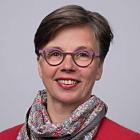
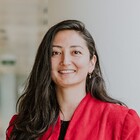
Jeske Verhoeven joined IRC in October 2008. Her focus is on capacity development for WASH systems strengthening and managing the WASH Systems Academy. In 2018 she started leading the development of this online collaborative platform developed to assist WASH sector professionals with knowledge and tools to apply a WASH systems strengthening approach.
Her other areas of expertise include WASH finance, Aid Effectiveness and Process Documentation. In the WASHCost project (2008-2013) she was responsible for development, coordination and facilitation of the Life-cycle cost approach training package and the Costing Sustainable Services online course. She was also responsible for the development and implementation of life-cycle cost approach database protocol, research on expenditure on direct and indirect support, support to project management and involved in process documentation. Her research on WASH finance has been specifically on finance for capital maintenance and urban sanitation. Jeske has developed a training package to facilitate training on aid effectiveness and research on aid effectiveness in the water, sanitation and hygiene sector. Jeske has supported country teams with the documentation of action research, facilitated training sessions on process documentation and organised writeshops.
Jeske has a BA in Journalism from the School of Journalism in Utrecht, The Netherlands and an MA in International Development Studies from the University of Utrecht, The Netherlands.
The main purpose of this report is to reflect with key stakeholders involved in trying to scale up HWTS in Ghana (as part of the Safe Water Phase II) on what happened. Read more...
Join for free! Courses start Thursday 1st of March, Friday 1st of June and Monday 1st of October. Read more...
An enabling environment will stimulate financiers to invest in Safe Water business. Read more...
This is the final report from the Action Research for Learning programme (2013–2015). Read more...
Amref Health Africa has built showers and toilets for 2,400 people in the Afar region of northern Ethiopia. A story about action learning supported... Read more...
Water committees and handpump mechanics ensure safe and reliable services in Western Uganda. A story about action learning supported by the Dutch... Read more...
Local NGO Uttaran has constructed 'step toilets' for 2,000 people in flood-prone areas in south-west Bangladesh. A story about action learning... Read more...
A credit scheme helps families to build household toilets in northern Ghana. A story about action learning supported by the Dutch WASH Alliance. Read more...
In this video Urs Heierli, social marketing expert and advisor to the Safe Water II project, talks about the necessary paradigm shift to household water treatment systems.
Read more...Together the Netherlands and the World Bank can make a substantive contribution to reaching a joint vision; sustainable and equitable water and sanitation services for all by 2030. The World Bank sees the Netherlands as a leading knowledge provider in the water sector. Dutch expertise can... Read more...
The new agenda for the future of water and sanitation, defined by the Sustainable Development Goals, aims at universal access for all by 2030. Achieving this mission will require a radical shift in how the water and sanitation sector operates. The main Dutch water and sanitation stakeholders urge... Read more...
A paradigm shift is needed to reach the ambitious new Sustainable Development Goals that propose reaching universal water and sanitation coverage with sustainable services for all by 2030. This implies shifting focus by all actors in the water and sanitation sector from construction of water and... Read more...
While reviewing experiences with the UN-Water Global Analysis and Assessment of Sanitation and Drinking Water (GLAAS), it is clear that there is a need to strengthen systematic, comprehensive, country-led processes which feed global monitoring. Read more...
IRC was asked by DGIS to support the Netherlands Enterprise Agency with the introduction of sustainability instruments as part of the second round of the Sustainable Water Fund. Another example of how DGIS is taking sustainability of investments in the WASH sector seriously. Read more...
Sustainability instruments contribute to better water, sanitation of hygiene (WASH) projects but still face shortcomings. Read more...
IRC is involved in an exciting programme to stimulate businesses in products and systems for household water treatment and storage: Safe Water Phase 2. Read more...
Thinking critically about how you do your work and seeing the bigger picture towards which you are working, can improve the effectiveness of your work. Read more...
Within the context of the Ghana WASH Window (GWW), a delegation of 15 Ghanaian companies /NGOs/knowledge Institutions and 7 government officials were received by the Netherlands Water Partnership in the first week of October 2014 (29 sept. -3 Oct.). Read more...