Senior programme officer | Change hub
Follow

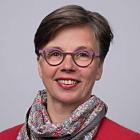
Marieke is a WASH expert with over 18 years of experience in the sector. She has a special interest in small town WASH, participatory strategic planning processes and evidence-based decision making in WASH.
After graduating as an Irrigation and Water Engineer from Wageningen University, Marieke joined IRC as a Junior Professional Officer (JPO) in 2003. As JPO she was stationed with NGO Forum (Bangladesh) and with TREND Group (Ghana). In 2006, she joined the IRC team in the Netherlands.
Marieke has led and participated in action-research studies in Ghana, Ethiopia, Uganda, Bangladesh and Zimbabwe on issues like monitoring sustainable WASH service provision, small town water supply, Integrated Urban Water Management (IUWM), multiple-use water services, and cost recovery and financing.
Marieke has experience in working closely with ministries (e.g. the Ministry of Water Resources, Irrigation and electricity in Ethiopia) and government agencies (e.g. Community Water and Sanitation Agency in Ghana) in identifying and addressing sector challenges. She has supported knowledge management and sector learning processes in various contexts and countries (e.g. support to the establishment and development of Learning Alliance Platforms in Ghana and Ethiopia and the Resource Centre Network Ghana).
Marieke is supporting the Accountability and Adaptation team, responsible for monitoring, with special emphasis on monitoring service level and financial indicators. She is also supporting various action research projects, with special focus on monitoring and sustainability issues. She is leading the development of a District WASH Master Planning Facility.
Neither rural sustainability checks, nor urban benchmarking frameworks, are entirely suitable for monitoring small town water services. Read more...
The District Strategy for achieving full water coverage (2017 to 2025) provides the framework for the implementation of water activities and services... Read more...
Strengthening and clarifying the capacity of local government institutions is critical to the success of SDG6 (Water) and contributes to SDG16 (... Read more...
This paper presents findings on water and sanitation service levels from 16 small and medium towns in four regions of Ethiopia. Read more...
This publication has been produced by IRC as part of its independent monitoring and knowledge management services to the ONEWASH Plus programme. The... Read more...
Data was collected on household income, diarrhoeal disease occurrence, water service provision, and sanitation and hygiene services and practices at... Read more...
Presentation of WASH sustainability check results, sharing the findings of sustainability checks undertaken in Ethiopia in 2015. Read more...
This factsheet presents a summary of the key findings relating to water supply, sanitation and hygiene infrastructure and the services received by... Read more...
This factsheet presents a summary of the key findings relating to water supply, sanitation and hygiene infrastructure and the services received by... Read more...
This factsheet presents a summary of key findings relating to water supply, sanitation and hygiene infrastructure and the services received by... Read more...
This factsheet presents a summary of the key findings relating to water supply, sanitation and hygiene infrastructure and the services received by... Read more...
The results of a sustainability check, monitoring service delivery in towns, satellite villages and institutions that are targeted in the ONEWASH... Read more...
Results of an initiative to monitor sustainability factors in towns in Ethiopia. Read more...
Webinar recording discussing two initiatives from Asia related to the topic how to move from building infrastructure to creating support mechanisms... Read more...
This case study examines how the Multiple Use water Services (MUS) approach was applied in Kalu to develop joint domestic water supply and irrigation... Read more...